Tag: Africa

9 Day Cairo Itinerary
AfricaGate 1 ConnectionsMediterranean

9 Day Cairo Itinerary

Ancient history doesn’t get more fascinating than Egypt’s. In this Gate 1 Travel Stay & Explore tour, travelers will embark on a nine-day adventure in Cairo and it’s surrounding area. Learn about the city’s ancient history, all while getting to see iconic landmarks such as Great Pyramid of Giza, Memphis, the capital of Egypt during the Old Kingdom, and the famous Step Pyramid of Djoser.

Quick Facts

  • Tour Length: 9 Days
  • Destination: Cairo, Egypt
  • Trip Type: Stay & Explore Tour
  • Hotel Nights: 7 nights in Cairo
  • Tour Focus: Ancient history, culture, architecture & local experiences
  • Major Highlights: Great Pyramid of Giza, Grand Egyptian Museum, Memphis & Step Pyramid of Djoser
  • Cultural Experiences: Historic Cairo walking tour, religious landmarks, perfume shop & El Khalili Bazaar
  • Optional Experience: Full Day Luxor with Flights
  • Best For: History enthusiasts, culture seekers & travelers looking for a flexible Cairo experience

Day 1

On Tuesday, travelers will depart for Egypt.

Day 2

Once arrived in Cairo, the capital of Egypt, you’ll transfer to your hotel. The rest of the day is at your leisure.

Day 3

Travelers will get their day started by heading to Old Cairo in the morning. Old Cairo is the original home of the Coptic Christians, one of the world’s oldest Christian denominations. Travelers will get to visit the Hanging Church (built in the 7th century), Abu Serga (believed to be where the Holy Family took refuge in Egypt), a Jewish synagogue, and one the oldest mosques in Cairo, Ibn Tulun. After seeing all these religious sites, stop at a local perfume shop, where you’ll explore a diverse collection of traditional and exotic scents, while learning about the art of perfume making. Lastly in the late afternoon, embark on a walking tour that takes you through Cairo’s historic center.

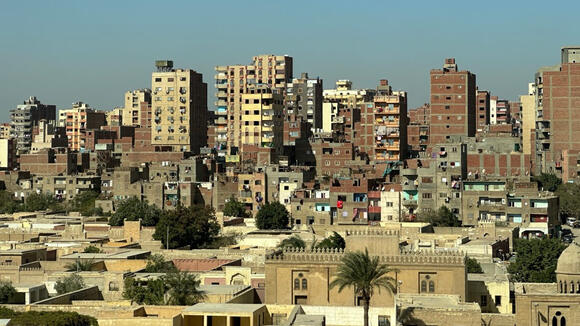
Cairo City

Day 4

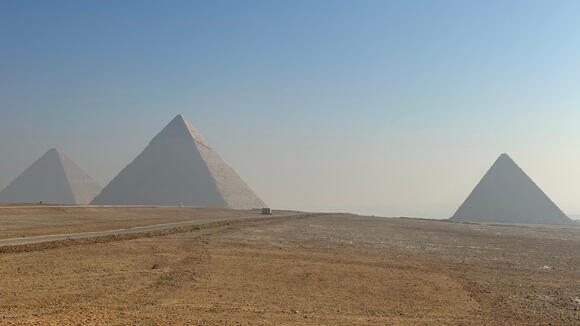
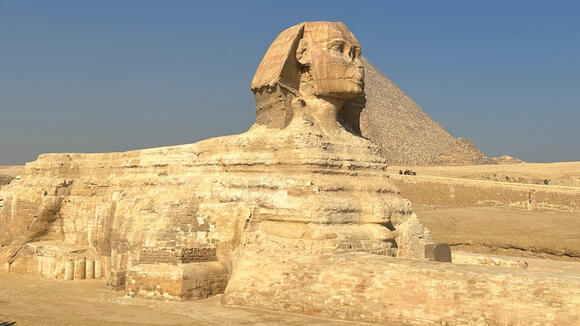
This morning, get ready to visit the iconic Pyramids of Giza, built during the 3rd and 4th dynasties of the Old Kingdom. Get an up-close view of the Great Pyramid, built for the Pharaoh Khufu, as well as the Pyramids of Khafre and Menkaure. That’s not all, you’ll also be able to view the great Sphinx of Giza, the legendary statue with the head of a human and the body of a lion, amazingly carved out of a single piece of limestone. Continue with a visit to the splendid new Grand Egyptian Museum (GEM), located near the iconic Pyramids of Giza. This state-of the-art museum houses the world’s largest collection of ancient Egyptian artifacts. Once you’re back at the hotel, don’t miss Gate 1 Travel’s optional Nile Dinner Cruise. Travelers will embark on a delightful cruise along the iconic Nile River and discover the beauty of the ancient Egyptian city by night. Enjoy a Tanoura dance show and later watch a belly dancer perform mesmerizing routines. Take in the views of the city’s sparkling lights as you savor local specialties for dinner.

Cairo Pyramids

Day 5

Today is free for you to explore Cairo on your own or join the optional Full Day Alexandria tour. Discover the legendary city of Alexandria, a culturally rich seaside metropolis and Egypt’s second largest city. First visit the Roman amphitheater, then continue to the Catacombs of Kom el Shoqafa, a necropolis hewn into a cliff that consists of 3 levels, dating from the 2nd century AD. Finish with viewing the Roman triclinium, a funeral banquet hall to honor the dead. Then visit the Royal Jewelry Museum, where you’ll view precious artifacts, jewels, and jewelry of the Muhammad Ali Dynasty that ruled Egypt from 19th to the mid-20th century. The optional tour caps off the day with lunch at a local restaurant with beautiful views of the Mediterranean Sea.

Alexandria Egypt

Day 6

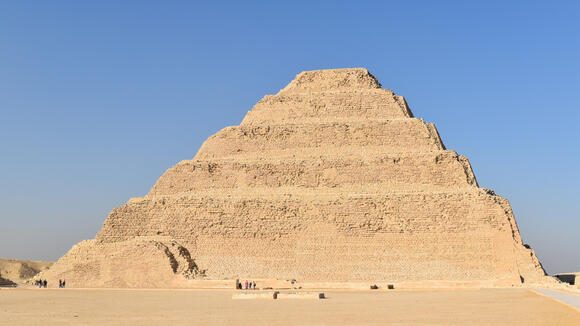
Today is where you’ll visit another city, Memphis. Memphis was the capital of Egypt during the Old Kingdom, founded by Pharaoh Menes around 3100 BC. Today, the city stands as an open-air museum highlighted by a giant statue of Ramses II. Then, continue to Sakkara, the site of hundreds of tombs where you’ll view the famous Step Pyramid of Djoser, considered to be the oldest pyramid in Egypt. After seeing these ancient landmarks, stop for lunch at a local restaurant, followed by a visit to carpet shop in the surrounding area. Finish the day by exploring Khan El Khalili Bazaar, Cairo’s most famous souk. Established in the 14th century, this vibrant market is a treasure trove of traditional crafts, jewelry, spices, textiles, antiques, and souvenirs.

Khan El Khalili Bazaar Egypt

Day 7

Travelers can spend this day at leisure in Cairo or join the optional Full Day Luxor with Flights. First transfer to the airport to get to Luxor. On arrival, you’ll begin the exploration of the magnificent West Bank. Visit the UNESCO listed Valley of the Kings, the necropolis of Thebes, and admire the tombs of Egypt’s pharaohs from the 18th to the 20th dynasties. Next, head to the mountainside Temple of Hatshepsut, a colonnaded structure surrounded by cliffs and learn about the life of Queen Hatshepsut, Egypt’s longest-reigning female ruler. Conclude the optional tour at the Colossi of Memnon, two massive stone statues of the Pharaoh Amenhotep III. These imposing figures, each towering at 600 feet high, were originally designed to guard his mortuary temple. That night, return to Cairo by flight.

Luxor Temple

Day 8

Spend your last day in Cairo at leisure or join another optional tour where you’ll visit the Civilization Museum & Citadel. First visit the National Museum of Egyptian Civilization, where you’ll be amazed by its extensive collection of more than 50,000 artifacts, depicting the several stages of the development of Egyptian civilization from the Predynastic period to the modern age. Next, visit a jewelry shop. Browse the extensive collection of uniquely crafted gold jewelry and notice the array of distinctive cartouches, local symbols of good luck and protection from evil. Then, visit the Saladin Citadel of Cairo, a UNESCO World Heritage Site. This impressive structure, located in central Cairo is a medieval Islamic fortification. Lunch is included in this tour. Tonight, at dinner, bid farewell to your Tour Manager.

Saladin Citadel of Cairo

Day 9

Transfer to the airport for your departure flight.

A 9-Day Journey Through the Heart of Egypt

Gate 1 Travel’s 9 Day Tastes of Cairo is the perfect tour for those looking to explore the local scene of Cairo while also getting to see some of the most famous landmarks of all time. From the Pyramids of Giza, to the Sphinx, and even the impressive structure of the Saladin Citadel, every day has something that brings you closer to both modern-and past-day Cairo. If interested in the rest of our Egypt itinerary, click here. And what Egyptian landmark would you like to see? Share this post and let us know!

Frequently Asked Questions

What are the main highlights of the Cairo tour?
Highlights include the Great Pyramid of Giza, Grand Egyptian Museum, Memphis, the Step Pyramid of Djoser, historic Cairo, and El Khalili Bazaar.

Will I have free time to explore Cairo?
Yes. The Stay & Explore format combines guided sightseeing with independent time, allowing travelers to customize portions of their experience.

Is this tour good for travelers interested in ancient history?
Yes. Ancient Egyptian history is a major focus, with visits to the Pyramids, Grand Egyptian Museum, Memphis, and Sakkara among the itinerary’s key experiences.

Robben Island - South Africa's Famous Prison
Africa

Robben Island: South Africa’s Famous Prison

Sitting off the coast of Cape Town, South Africa is a famous tourist destination, known as Robben Island. The island is best known for the prison where Nelson Mandela was incarcerated, yet it has a rich history dating back 500 years. Today, Robben Island stands as a UNESCO World Heritage Site. It helps remind those of South Africa’s past and its journey towards freedom.

Quick Facts

  • Location: Robben Island, off the coast of Cape Town, South Africa
  • Historical Significance: Former prison, hospital, and military site
  • Apartheid-Era Prison: Used as a maximum-security prison for political prisoners from 1961 to 1991
  • Nelson Mandela: Spent 18 of his 27 years in prison on Robben Island
  • World Heritage Site: Designated a UNESCO World Heritage Site in 1999
  • Today: Preserved as a historic site and museum where visitors can learn about the island’s history and the struggle against apartheid

Early History of Robben Island

Robben Island is approximately five miles off mainland South Africa. The island is quite small, as it has an approximate area of five square miles. The island’s name comes from the Dutch word for “seals” (zeehonden), as seals were once common in its waters. Originally a Dutch settlement, it later served as a prison, hospital for those deemed “socially unfit”, and a military base between the 17th and 20th century.

Robben Island Early History

Inside the Robben Island Prison

The prison consisted of four H-block General Sections, a U-shaped isolation block, a hospital, kitchen, and a dining hall. Each general section contained four general cells designed to hold 52 inmates. The isolation block had about 90 single cells in total. In the 1960s, political and common law prisoners were held together in the general section. They spent their days breaking rocks or working in a glaring lime quarry that caused permanent eye damage for many men. Food was very scarce, as black prisoners received the worst treatment, such as having lower food rations or having to wear degrading clothing.

Nelson Mandela Robben Island

Nelson Mandela’s Years on Robben Island

Nelson Mandela was sent to Robben Island because he was convicted of sabotage and plotting to overthrow the South African apartheid government. During the Rivonia Trial, Mandela received a life sentence. He spent 18 years on Robben Island, from June 1964 to March 1982, as part of his total 27-year sentence. Like the other prisoners, he lived in a tiny, damp cell with only a straw mat to sleep on. Guards even heavily restricted his mail and visits from family or outsiders. Though this was not a positive experience for Mandela, his time in prison on Robben Island became an important part of his story and the broader struggle against the apartheid.

Nelson Mandela Robben Island

Mandela’s Prison Release

By the late 1980s, South Africa faced internal unrest and severe international economic sanctions. This resulted in growing domestic and global pressure on the apartheid government to consider its stance. In 1985, the government did offer Mandela conditional freedom, but he refused it as he wanted to stand by his principles. Finally, in 1990, South African President F.W. de Klerk lifted the ban on the ANC (African National Congress) and ordered Mandela’s unconditional release. Mandela’s release was historic, as many remember him famously walking out of prison together with his wife, Winnie Mandela. Mandela’s freedom then led to negotiations to end apartheid, resulting in the country’s first multiracial democratic elections in 1994, where he was elected president.

Robben Island

Modern Day Robben Island

Robben Island has vastly changed over the years. It’s now a preserved UNESCO World Heritage Site and has a public museum too. You can visit this historic location by booking Gate 1 Travel’s 10 Day Classic South Africa with Robben Island tour. This tour takes travelers directly to the island by ferry. Once arrived, you’ll have a tour guide take you around the prison where you’ll see Nelson Mandela’s cell, the lime quarry, and much more.  

Modern Day Robben Island

A Journey Through South Africa’s History

Visiting Robben Island is a once and a lifetime opportunity, where travelers can directly visit the location of one of the most historical moments of the last century. See up close what the prison’s living conditions were like while also learning about its impact on South Africa’s government. Travelers can visit Robben Island and have an extended stay in South Africa by booking our 13 Day tour instead. What other historical landmarks have you visited? Share this post and let us know!

Frequently Asked Questions About Robben Island

Why is Robben Island famous?
Robben Island is best known for its former maximum-security prison, where Nelson Mandela and many other political prisoners were held during South Africa’s apartheid era. The island has become an international symbol of the struggle for freedom and democracy.

Was Robben Island always a prison?
No. Robben Island has served several purposes throughout its history, including use as a prison, hospital, and military base. It was also used as a place of imprisonment long before the apartheid-era prison was established.

How long was Nelson Mandela imprisoned on Robben Island?
Nelson Mandela spent 18 years of his 27-year imprisonment on Robben Island before being transferred to Pollsmoor Prison in Cape Town in 1982.

When was Robben Island used as a political prison?
The apartheid government used Robben Island’s maximum-security prison to hold political prisoners from 1961 through 1991. Prisoners included people who opposed apartheid and fought for freedom and democracy.

Can you visit Nelson Mandela’s prison cell?
Yes. A visit to Robben Island includes the opportunity to see the prison and the cell associated with Nelson Mandela, providing a closer look at the conditions political prisoners experienced during their imprisonment.

Why is Robben Island a UNESCO World Heritage Site?
Robben Island was added to the UNESCO World Heritage List in 1999 because its buildings and landscapes document its difficult history and symbolize the triumph of freedom and democracy over oppression and racism.

Can travelers visit Robben Island from Cape Town?
Yes. Robben Island can be visited from Cape Town, making it a natural addition to a South Africa itinerary that includes time in the city and the surrounding region.

Portrait of beautiful big lion at safari park in South Africa
AfricaGate 1 Connections

Inside Southern Africa’s Luxury Lodges: Amenities & Experiences

What Defines a Luxury Lodge?

A luxury lodge is an accommodation that combines the characteristics of a lodge with luxury amenities and services, offering a high-end experience in a natural environment. At Gate 1, our lodges in Southern Africa are mainly located in national parks or near famous rivers. We’re looking to provide travelers with an enjoyable experience that allows them to feel up close and personal with nature, while also providing as much safety and comfort as possible.

Kruger Gate Hotel Southern Africa Luxury Lodge

Exclusive Wildlife Encounters

The main selling point of a luxury lodge is being able to watch nature in its natural habitat. At Gate 1, travelers can book the 14 Day Classic South Africa with Robben Island & Victoria Falls Tour and stay at the Victoria Falls Safari Lodge. This luxury lodge borders the Zambezi National Park and is about 2.5 miles from the Falls. The lodge’s restaurant and bar overlook a large water hole. Many animals gather here to drink water, specifically elephants.

Victoria Falls Safari Lodge

Also, if you’re looking to get even closer to the animals, then travelers should book the 12 Day Classic South Africa with Robben Island Tour at Gate 1. This Southern Africa guided tour allows guests to explore an open-vehicle game drive in Kruger National Park. You will get the chance to see lions, elephants, giraffes, and zebras in their natural habitat. After a long day out in the park, travelers can unwind at the Kruger Gate Hotel, where you might spot elephants grazing just beyond the Sabie River while you sip a drink at the pool bar.

Kruger Gate Hotel

Elevated Dining & Personalized Service

The luxury lodges in Southern Africa offer both elevated dining and individualized comfort at these locations. Travelers staying at the Kruger Gate Hotel can expect guest rooms that feature elegant furnishings with refined African inspired décor, rooms fitted with en-suite bathrooms, air-conditioning, free WiFi internet access, a safe, and a mini fridge. Don’t forget the hotel’s spa, fitness center, and Infinity pool if guests are looking to unwind.

And at the Kudyela Restaurant, guests are served buffet-style breakfast daily. At the Lapa Restaurant, savor delectable international cuisine along with African specialties, complemented by music and dancing. Guests can relax at the Pool Bar, offering light fares and a wide selection of drinks, while enjoying views of the Sabie River.

Unique Experiences Beyond the Lodge

Viewing the animals in their natural habitat is one of the main reason travelers come to Southern Africa, but that’s not all. On the 13 Day Zambia & Zimbabwe Safari Adventure Tour, expect to indulge in a variety of activities. Get outside and cruise in canoes or motorized boats, enjoy scenic game drives, or even relax by taking a guided nature walk. Or visit the iconic Victoria Falls, one of the “Seven Natural Wonders of the World”.

Conclusion

Southern Africa is a beautiful place to be visit; especially if you stay in a luxury lodge. Whether you’re relaxing poolside on the banks of the Sabie River at the Hippo Hollow Country Estate or Kruger Gate Hotel or even seeing elephants all while staying at the Victoria Falls Safari Lodge, these memories will stick with you forever.

Hippo Hollow Country Estate

Ready to experience Southern Africa like never before? Browse our full list of Southern Africa Guided Tours and find the luxury lodge that’s perfect for your next adventure. 

Cairo
AfricaGate 1 Connections

How to Explore Cairo & the Nile River – Must-See Sights and Tips

A Gateway to Ancient Wonders

Welcome to Egypt, one of the world’s greatest ancient civilizations. The country’s two most famous locations are its bustling capital, Cairo, and the historic Nile River. Cairo is the largest city in the Mediterranean and North Africa; it is in Northern Egypt. In relation to the city, the Nile River flows through it. The Nile is the longest river in the world, resulting in a total of 4,132 miles. Travelers can explore both iconic locations on Gate 1’s guided tour, the 9 Day Classic Egypt with 4 Day Nile Cruise.

Uncovering the Treasures of Cairo

When visiting Cairo, be ready to explore, there are so many historical things to see. On Gate 1’s guided tour, 9 Day Tastes of Cairo, travelers will have the opportunity to experience numerous ancient sights. You can take a walking tour of Cairo’s historic center and visit the famed El Khalili Bazaar, or marvel at the oldest structure of the “Seven Wonders of the Ancient Word,” the Great Pyramid of Giza. And that’s not all, view the famous Step Pyramid of Djoser, built by architect Imhotep and explore the Egyptian Museum. This museum houses the world’s most extensive collection of Pharaonic antiquities.

Cairo City

Cruising the Legendary Nile

No trip to Egypt is complete without a journey along the legendary Nile. Travelers who book with Gate 1 can embark on a week-long cruise on the Nile; this guided Egypt tour is the 15 Day Crown of Egypt with Hurghada & 7 Day Nile Cruise. The first morning of the cruise provides travelers with a sightseeing tour of the East Bank of Luxor. Then visit the magnificent Temples of Karnak, these date back over 3,000 years. You also will get to walk along the avenue of the Sphinxes and marvel at the Hypostyle Hall with its 134 massive sandstone columns. The next day, you will be taken on a tour of the imposing Greco-Roman Temple of Kom Ombo, that is dedicated to Horus, the Sky God, and Sobek, the Crocodile God. This is a must-see for those who love Egyptian mythology and architecture.

Nile Feluccas

When to Go and What to Expect

If you’re wondering when to visit Egypt, the ideal time is between October to April when temperatures are milder. Thankfully, a majority of Gate 1’s Egypt guided tours start in September and end in May.

Tips for Travelers:

  • Dress modestly and comfortably. Light layers and breathable fabrics are ideal.
  • Bring sun protection, including hats and sunscreen.
  • English is widely spoken in tourist areas.

Conclusion

If you’re looking to explore ancient artifacts, a lively city in Cairo, or just relax on a beautiful cruise of the Nile River, then Egypt is the place for you.

Interested in exploring Egypt with Gate 1? Click here to discover all our travel packages and start planning your trip today!

Abu-Simbel
AfricaGate 1 ConnectionsMediterranean

Explore the Magnificence of Egyptian Temples

Egyptian temples stand as timeless monuments, embodying the grandeur and mystique of ancient worlds. Each stone tells a story of devotion, power, and architectural brilliance, inviting modern travelers to embark on a journey through history. Here are some of the most iconic and inspiring temples open to visitors in Egypt today. 

Luxor Temple: Amun, Mut, and Khonsu

The Luxor Temple is located at the heart of ancient Thebes. Dedicated to the Theban Triad of Amun, Mut, and Khonsu, it mesmerizes visitors with its colossal statues, imposing pylons, and intricately carved reliefs. Many visitors feel that Luxor Temple exudes a surreal aura, transporting you to a bygone era of divine worship and royal ceremonies.

Edfu Temple: Horus the Avenger

Nestled on the west bank of the Nile, the Edfu Temple stands as one of the best-preserved shrines in Egypt, dedicated to the falcon-headed god Horus. Built during the Ptolemaic period, this temple is a masterpiece of Greco-Egyptian architecture, adorned with elaborate inscriptions that narrate the mythic struggle between Horus and his nemesis, Seth.

Philae Temple: The Goddess Isis

Philae Temple enchants visitors with its sublime beauty. Dedicated to the goddess Isis, this island sanctuary served as a center of pilgrimage and worship for millennia. The 1960’s construction of the Aswan Dam prompted an effort to preserve Philae Temple, seeing it relocated to a new island one piece at a time. Today it still stands as a testament to the importance of preserving heritage.

Abu Simbel Temples: Rameses II and Nefertari

In the desolate sands of Nubia rise the colossal Abu Simbel Temples, commissioned by the mighty pharaoh Ramses II to immortalize his reign and deify his glory. Carved into the cliffs overlooking Lake Nasser, the twin temples of Abu Simbel are dedicated to Ramses II himself and his beloved queen, Nefertari. This is just one of the many awe-inspiring stops on our 13 Day Crown of Egypt with 7 Day First Class Nile Cruise.

Temple of Kom Ombo: Sobek and Horus the Elder

The Temple of Kom Ombo is a unique architectural marvel dedicated to two gods: Sobek, the crocodile deity, and Horus the Elder. It features symmetrical design elements, twin entrances, courts, and sanctuaries dedicated to each deity. The walls of Kom Ombo Temple are adorned with exquisite reliefs offering insights into ancient Egyptian medicine and religious beliefs.

Temple of Karnak: Amun

No exploration of Egyptian temples would be complete without a visit to Karnak. Dedicated to the god Amun, Karnak Temple is a vast ensemble of sanctuaries, pylons, obelisks, and hypostyle halls that reflect the contributions of pharaohs spanning over a millennium. Visitors can’t help but be awestruck by the scale and ambition of ancient Egyptian architecture and religious devotion.

In conclusion, Egyptian temples are not merely architectural wonders but living testimonies to the spiritual, artistic, and cultural legacy of an extraordinary civilization. You can experience all of this wonder and so much more for yourself on a Gate 1 Escorted Tour of Egypt. Whether you’re marveling at the grandeur of Luxor Temple or contemplating the mysteries of Abu Simbel, Gate 1 escorted tours offer impactful experiences with the timeless allure of ancient Egypt that are sure to stay with you for a lifetime.

chobe
AfricaGate 1 Connections

Experience the Greatest Wonders of the World: Zambia, Botswana & South Africa

The southern region of Africa is as photogenic as they come, showcasing euphoric animals, sweeping sand dunes, and beaches clad with penguins. From sunrise to sunset, these natural scenes unfold for all to see, filling in your scrapbook without any trouble.

While a two-week period will allow you to barely scratch the surface of southern Africa’s lure, our 13-day tour through Zambia, Botswana, and South Africa provides an immersive opportunity to experience these wonders firsthand. Bring your best safari style, camera gear, and binoculars for this daydreaming adventure.

Rivers and Falls and Railways

Challenging many individuals’ perceptions of Africa are the continent’s bodies of water, adding to its diverse landscape. During your travels, you’ll have the chance to experience these in a unique way, first through a sunset cruise down the Zambezi River. Animal sightings might include hippos, elephants, and buffalo. Eventually, this river plunges downward, creating the iconic scene of Victoria Falls. This UNESCO World Heritage Site is a highlight of the trip, often presenting a rainbow for viewers to awe over.

As the day goes on, your legs might begin to tire, putting you in the perfect position to board a restored steam train. Enjoy a pre-dinner train ride along the aged railway lines, peeking out your window to spot some remote whereabouts.

A Day of Game Drives

Situated in northern Botswana is a solitary stretch of preserved land named Chobe National Park. Its grasslands and watering holes are the breeding grounds for a variety of wildlife native to Africa. Picture sturdy elephants, long-necked giraffes, striped zebras, and regal lions. These big-name animals make up a larger picture of wildlife that gallivant through this protected area. Your trip will allow you and your travel mates to rest in an open safari vehicle while scouting out the best viewing spots in both the early morning and the sun-drenched afternoon.

Setting Chobe apart from its rival game drives is its suitable environment for bird watching, as it is home to a variety of species ranging in size, color, and demeanor. You’ll want to make sure you’ve packed those infamous binoculars for this day of the trip.

Enjoy Safari Cruises on More Than One Occasion

Safaris are not meant to be landbound. This immersive tour through southern Africa’s best wonders will give you ample opportunity to view wildlife from differing points of view, with safari cruises reigning supreme for many. In the aforementioned Chobe National Park, travelers will also have the option to embark on a sunset safari cruise, enjoying an evening gliding past hippos, buffalo, and antelope.

Okavango Delta, on the other hand, is a swampy paradise reached by aircraft. These grasslands are notorious for becoming flooded at certain points of the year, but their presence in the Kalahari Desert makes an ideal habitat for a number of animals, including ostrich, crocodiles, and wildebeests.

Other safari activities that can be optionally included in your itinerary include canoe cruises, nature walks, and fishing expeditions.

The Highlights of Cape Town

Cape Town, South Africa, is a port city with scenic coastal views, mountaintops, and architectural hotspots. With your time here, you’ll be encouraged to explore the city’s colorful appeal. Most importantly, you’ll want to ascend to Table Mountain, approachable either by a hike or taking an aerial cable car, the latter of which allows visitors to peacefully overlook the city below.

Upon descending from the mountaintop, make a brief stop at the Milnerton Lighthouse, a distinguished white beam that acts as a nautical guard.

Included in your tour is a home-cooked meal with your host family, allowing for a cultural exchange of stories, flavorful food, and good company.

A trip to Cape Town wouldn’t be complete without visiting Boulders Beach, a protected area home to a lovable penguin colony that spends its days waddling on the sand and jumping in the water.

Wine Tours and Fishing Villages

South Africa has a thriving wine production scene, with a variety of vineyards mapping out a wine route perfect for a day of sampling these bottles. In the town of Franschhoek, you’ll be able to board a hop-on-hop-off tram through the lush wine valley, making intermittent stops at a handful of estates and finishing with the university town of Stellenbosch.

Find more wildlife before leaving Africa with a tour through Cape Peninsula, making a stop at the fishing village of Hout Bay and the Cape of Good Hope Nature Reserve. Here, you’ll likely spot some cheeky baboons, horned bonteboks, and more.

Finish off your drive by the seaside and prepare for your final moments in southern Africa, reminiscing on the diverse wonders of the world you witnessed in this short span of time.

Kenyan Food
AfricaGate 1 Connections

A Taste of East Africa: Experience the Culture and Cuisine

No matter where your travels take you, it will be nearly impossible to match the rich culture and cuisine that is found in eastern Africa. For those who have traveled this route, they would agree that this side of Africa has electric energy made even more apparent by its perfectly-posed wildlife and fearless safari leaders.

Needless to say, it is important to get out of your comfort zone on your travels. Eastern Africa does this extremely well, introducing its culture to curious travelers wanting a peek at this side of the continent.

What Is Waiting for You in Terms of Culture

Peruse Local Markets and Historical Sites

While eastern Africa has a wide stretch of open land ideal for wildlife to thrive, it also has been habituated by a lively people group whose culture is evident for all. Kigali City, the capital of Rwanda, is an excellent example of this, with its modern feel connecting current residents to the city’s past. One event, in particular, that is honored here is Rwanda’s genocide, which visitors can learn about in more depth at the Kigali Genocide Memorial.

Diving deeper into the culture, travelers can stroll through the local craft market to purchase locally-created items ranging from baskets to dolls to bracelets. Support the local economy and learn about the story behind these souvenirs to make your visit even more meaningful.

Peer Into the Lives of Gorillas

Eastern Africa’s culture is very closely tied to its wildlife. You’ll have the chance to learn about this connection more intimately as you embark on a gorilla trek with experienced rangers. Having curated this activity to be as sustainable as possible, visitors are led on a hike lasting up to 7 hours, trekking through the foothills of the Virunga Volcanoes.

Many would argue that there is nothing more surreal than camouflaging with your surroundings while searching for a secluded gorilla family. After spotting a family of these great apes, you’ll be allotted an hour to watch them do life, which largely consists of eating and playing.

Say Yes to Monkey Business

Home to the distinguishable and, quite frankly, adorable Golden monkeys is none other than the highland forests of Volcanoes National Park. While you’ll experience a variety of wildlife on this trek, your main purpose is to catch a glimpse of these playful primates. Given their current endangered status, this remarkable experience will be one that you will treasure for a lifetime.

Experience Additional Wildlife on Game Drives

What brings most travelers to Africa is its plethora of safaris promising front-row views to hair-raising wildlife. If this was your motivation to travel to Africa, you’re in luck. Eastern Africa is home to a plethora of reserves and national parks that strive to protect these species while also providing a safe opportunity for foreigners to experience them up close and personal.

A few locations you’ll spot this wildlife in during your game drives include Masai Mara National Reserve, Serengeti National Park, Amboseli National Park, and more. Keep your eyes peeled for rhinos, lions, elephants, buffalo, and leopards.

Before you leave, conquer your fear of heights by signing up for a sunrise balloon safari. Elevated above the vast landscape, you’ll be able to spot these majestic creatures from a new angle. If this isn’t convincing enough, you’ll also receive a champagne breakfast upon your safe landing.

What Is Waiting for You in Terms of Cuisine

Sample Local Coffee

Coffee has deep routes in eastern Africa, specifically in Ethiopia. Of course, this phenomenon spread worldwide, but it is still vastly celebrated in its more natural form in Africa. Kigali City in Rwanda has capitalized on this worldwide beverage, serving a sweet and savory flavor in its many coffee shops. During your travels, indulge in coffee the Rwandan way in one of its many aesthetic shops.

Take a Local Cooking Class

When in eastern Africa, you’ll likely feel inspired by the diverse cuisine. Form a deeper connection to the local culture by enrolling in a cooking class to discover how they prepare some of their most renowned dishes. You’ll gain a broad overview of the larger cuisine offerings, creating a bucket list of recipes to indulge in once more before your travels come to an end.

Indulge in These Favorite Dishes

Although your cooking class will provide a great introduction to the region’s famed dishes, there is never any harm in coming prepared with a list of recipes that you can’t leave without trying. One dish that reigns supreme in Kenya is matoke, a mixture of fried bananas, onions, tomatoes, and sauce.

In Tanzania, don’t miss out on a local favorite: mandazi. Bearing the appearance of a beignet sans powdered sugar, mandazi is fried bread that makes for a sugary treat. Some other popular foods to try throughout your trip include ugali, tibs, and mshikaki. Eastern Africa is an influential destination with a mixture of culture, cuisine, and wildlife that never ceases to inspire travelers. The aforementioned activities can all be experienced through our 15-day tour through Kenya, Tanzania, and Rwanda, but there are countless other trips led through eastern Africa that share similarities with this itinerary, all of which are exuding with culture.

Cairo
Africa

What to See in Cairo – A City of Contrasts

Cairo is a city of paradoxes, full of ancient historic sites and neighborhoods, modern suburbs, fantastic museums, delicious and exotic food, and colorful but chaotic and crowded streets. As part of a tour package to Egypt provided by Gate1 Travel, we spent several days experiencing all that Cairo has to offer.

Upon arrival, visitors may be overwhelmed by the city’s chaotic nature. Driving through the sprawling metropolis between the airport and the central city, where most hotels are located, you will see thousands of older, non-descript brown and beige mid-rise buildings, beautiful but decaying French influenced architecture, polluted waterways, masses of people everywhere, older cars and serious traffic congestion. Much of this is understandable given Cairo’s age (nearly 1,700 years old), and metropolitan population of over 20 million people. One needs to dig deeper (pun not intended) to truly appreciate what this historic city has to offer. There are many attractions worth visiting throughout this fascinating city, and we were only able to see a few of them. Our stay included visits to the ancient ruins of Giza, the Coptic Christian quarter, the souk within the Old Islamic district, and the amazing Egyptian museum.

https://img.particlenews.com/image.php?url=19UUiP_0kfR2agI00

Not all of Cairo is so chaotic. Modern, more orderly sections of Cairo can be found in the northern and eastern suburbs, complete with glitzy high end shopping malls, theaters, parks, new residential towers and a wide variety of restaurants and bars.

The Ruins of Giza – If there is one place on earth that mystifies humans to this day, it would have to be the Pyramids of Giza, built during the fourth dynasty of the Old Kingdom. While pyramids of different styles and sizes are located throughout Egypt, especially along the Nile, the largest are located in Giza. Giza is located on the west bank of the Nile River and the pyramids are located at its western edge. Visitors may be quite surprised at how close the pyramids are to modern settlements.

https://img.particlenews.com/image.php?url=4FE2bi_0kfR2agI00

The mammoth Great Pyramid was built around 2,560 BC as the final resting place for Pharaoh Khufu (the second pharaoh of the Fourth Dynasty), and no one is certain as to the construction techniques used. Standing at 481 feet tall, and built of 2.3 million blocks of limestone, each weighing 2.5 tons, the pyramid was constructed by roughly 100,000 skilled laborers over a twenty year period. Other nearby Pyramids include the tombs of Khafre and Menkaure, as well as many other smaller temples and tombs. The pyramids were more than a grave for the Pharaohs. They were also built to facilitate a successful afterlife for the king so that he could be eternally reborn. This is why many of the pharaohs belongings were buried with them. If only I could travel back in time to witness the pyramids at the time of their construction, covered in a smooth white limestone finish and topped with gold block.

A visit to the nearby great sphinx of Giza is also a must. This large statue with the head of a human and the body of a lion was carved from one huge piece of limestone. It was built during the reign of King Khafre, around 2500 BC.

https://img.particlenews.com/image.php?url=4Nso47_0kfR2agI00

Saqqara – Twenty miles south of Cairo is Saqqara, where the burial grounds for the ancient Egyptian capital of Memphis are located. It is here where the oldest stone building complex exists – the Pyramid of Djoser, built in approximately 2,700 BC. This 200 foot tall pyramid is also known as the Step Pyramid because of its’ layered wedding cake shaped formation.

https://img.particlenews.com/image.php?url=33Clg3_0kfR2agI00

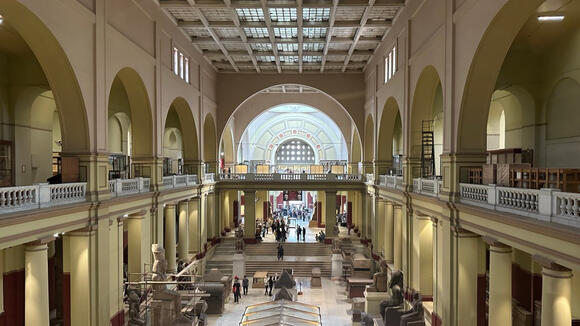
Egyptian Museum – Any visit to Cairo would not be complete without seeing the Egyptian Museum, which holds the largest collection of ancient Egyptian antiquities in the world. The museum is located in Tahrir Square on the east bank of the Nile River. Housed in a Neoclassical building dating from 1902, the museum’s two levels have over 136,000 items on display. We were amazed walking through the massive space, seeing up close a full display of all things Egyptian. The collection includes large scale stone works of statues, reliefs and architectural elements, papyri, coins, textiles and sarcophagi. Items are arranged chronologically from the pre-dynastic to the Greco-Roman period. There are two rooms containing mummies of kings and royal family members of the New Kingdom. Our highlight was touring the relics from the tomb of King Tutankhamun (Tut), including his golden mask and throne.

A new museum called the Grand Egyptian Museum, is being built in Giza, anticipated to open in 2023. It will have the largest, most complex collection of ancient treasures and artifacts in the world. Many of the relics from the current museum, including all relics related to King Tut, will be moved to the new museum. A 3,200 year old statue of Ramses II will greet visitors at the entrance.

https://img.particlenews.com/image.php?url=0MaUjA_0kfR2agI00

Coptic Cairo – About ten to twenty percent of the population of Egypt are Coptic Christians who adhere to the Coptic Orthodox Church. Copts speak the Coptic language, a direct descendant of the ancient Egyptian language. They are said to be the closest blood line to the ancient Egyptians because they did not marry outside the religion after the Muslim conquest of Egypt in the 7th century. Part of Old Cairo, the Coptic area encompasses the Babylon Fortress, the Coptic Museum, and a number of Coptic and Orthodox churches dating from nearly 1,700 years ago. Most of the sites are within the enclosure of the Babylon Fortress which was built by the Romans around 30 BC with the arrival of emperor Augustus. The Coptic Museum holds the largest collection of Coptic Christian artifacts in the world, including metalwork, stonework, woodwork, textiles and manuscripts.

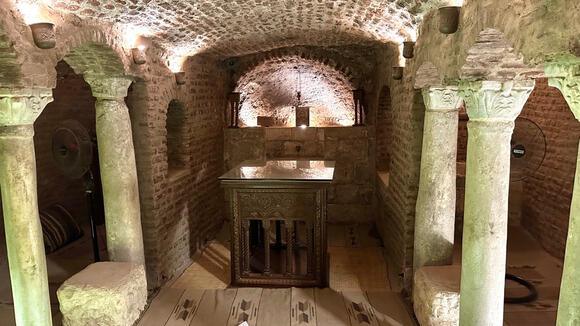
When King Herod of Judea ordered all firstborns to be killed, the Holy Family fled to Egypt. The crypt where they are said to have sought temporary refuge can be found beneath Abu Sarga, also known as the Church of St. Sergius and Bacchus (two Roman soldiers and martyrs), built in the 4th century CE. It is the oldest church in Egypt, and the crypt contains a domed ceiling, nave, and baptistery.

The Hanging Church, so named because it’s nave is suspended over a passage to the Babylon Fortress, was built around 690 CE, replacing earlier versions. It is one of the earliest churches in Cairo and includes over 100 beautiful icons and mosaics.

https://img.particlenews.com/image.php?url=0YfdJj_0kfR2agI00

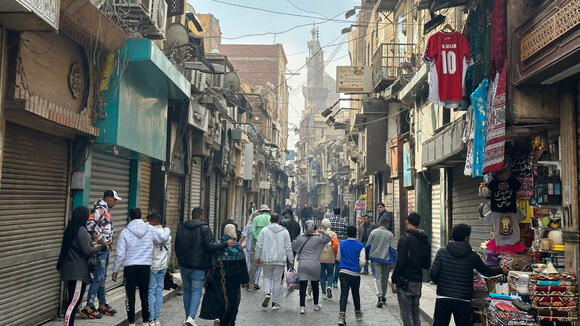
Old Islamic District – Located within the historic Islamic district of Cairo is the crowded and colorful Khan El Khalili souk (marketplace) that dates to the 14th century. The huge market is the perfect place for maximizing your senses of sight, smell and sound. The market contains hundreds of vendors selling pretty much everything, including antiques, gold and silver jewelry, spices, perfumes, clothing and carpets. We saw many interesting sites including a number of mosques with their towering minarets and medieval Islamic architecture. Nearby Al-Hussein Mosque is one of the largest, and is considered one of the holiest Islamic sites in Egypt.

https://img.particlenews.com/image.php?url=3KK3Lc_0kfR2agI00

While strolling through the narrow winding alleys of the souk, you get the feeling of being in medieval Cairo. One memorable moment is when I glanced to see a young man balancing a huge platter of freshly baked bread on his head while riding a bicycle. There are many restaurants and coffee houses where you can try Arabic coffee or hibiscus tea, and smoke shisha from a hookah. Hibiscus tea, also known as Karkadéh, was the preferred drink of the pharaohs, and the beverage is still popular today. We were greeted at many restaurants and shops with this delicious drink. The tea is made by boiling the hibiscus flower, and the drink has a bright pink color. Fishawi’s Coffee Shop, open since 1773, is the oldest coffee shop in Egypt.

Post written by Steve Sindiong

camel-pyramids
Africa

Egypt – An Ancient Country of Contrasts

I recently took my first trip to amazing and colorful Egypt, the land of Civilizations. This fascinating country has plenty to offer, including jaw dropping 5,000 year old temples and ruins, fantastic museums, beautiful natural scenery, ancient and modern cities, delicious food and friendly warm people.

Our trip consisted of two key components, including spending time in the capital and largest city, Cairo, and spending four days on a river boat along the Nile River between Luxor and Aswan. An overview of each is provided in the following separate posts.

Cairo – A City of Sensory Overload

A Scenic River Cruise Along the Nile

How to Tour Egypt

I would recommend that any traveler to Egypt use a good tour group at this time, rather than traveling on their own. Tour groups in Egypt are required to use security personnel. In addition, a tour group takes care of all transportation, hotels, meals, entry fees at attractions (thereby allowing you to bypass long lines) and use tour guides who are experts at providing information about all of the historic sites as well as managing daily logistics. We used Gate1, a tour company that I have used on several other trips. Gate1 offers a wide variety of air and land tours throughout the world at a reasonable price. Their tours include international and domestic transportation, varied and interesting itineraries, optional excursions and good to excellent lodging and dining. In Cairo, we stayed at the Marriott hotel, one of the best hotels in the city, located on Zamalek Island.

Our tour manager and guide, Rania, was excellent. She took care of all 30 of us from the beginning to the end of the trip, especially when some of us became ill from food poisoning. With her degree in archaeology, Rania was an expert Egyptologist, providing an in-depth history of each of the sites we visited, including a description of the hieroglyphics. She also provided information on modern Egypt, including the recent and current politics, social issues, and overall logistics.

Entry and Exit Requirements – American visitors to Egypt are required to have a valid passport with one or more blank pages, and a Visa. Visas can be purchased upon arrival at Cairo International Airport for $25 or can be purchased online ahead of time. All tourist visas are valid for 30 days.

The People

The population of Egypt is approximately 100 million people, and most of the population is concentrated in Cairo, Alexandria and along the fertile Nile Valley.  Egypt has a long history of being invaded by various cultures over thousands of years, including the Romans, Greeks, Persians, Arabs, British, French and other groups, resulting in a multi-cultural modern Egyptian society. The vast majority of the population are Sunni Muslim, while about ten to twenty percent are Coptic Christians who adhere to the Coptic Orthodox Church. Copts speak the Coptic language, a direct descendant of the ancient Egyptian language. They are said to be the closest blood line to the ancient Egyptians because they did not marry outside the religion after the Muslim conquest of Egypt in the 7th century. Nubians are an ethnic group mostly concentrated in southern Egypt near Sudan, who speak Nubian languages. Nubian villages are characterized by their brightly painted stucco walls, decorated with colorful symbols and patterns.

People in Egypt are generally friendly, hospitable, and helpful. Most people speak varying dialects of Arabic, however English is widely spoken since Egypt was formerly a British colony.

A group of Nubian women

Food and Drink

Egypt has delicious food, including excellent breads, kofta (spiced minced beef), kebabs, falafel, dips including hummus, labneh and ful nabed, and middle eastern style pastries. One of my favorite dishes is Kushari, a filling platter of rice, macaroni, and lentils and topped with tomato sauce, chickpeas and fried onions. It’s pure Egyptian comfort food. Most hotels also offer western style dishes, including the breakfast buffet. Egyptian coffee is prepared with a mixture of sugar, finely ground coffee and hot water. The grounds are not filtered, but rather allowed to settle prior to serving. Hibiscus tea, also known as Karkadéh, was the preferred drink of the pharaohs, and the beverage is still popular today. We were greeted at many restaurants and shops with this delicious drink. The tea is made by boiling the hibiscus flower, and the drink has a bright pink color.

It is paramount that you don’t drink tap water during your stay in Egypt. Hotels and tour bus operators will provide bottled water daily, which should be used for drinking and when brushing teeth. Food that is cooked is generally fine, but avoid street food, and raw food items such as lettuce, and fruits and vegetables that have been washed or not peeled. Even when taking precautions, out of our tour group of thirty, about six of us still became mildly ill for a few days.

Lunch at a Nubian restaurant

Money and Tipping

In Egypt, both dollars and Egyptian pounds are accepted. However, because of the current heavy fluctuation of the Egyptian pound, many people prefer dollars. As of January 2023, one Egyptian dollar equaled .033 US dollars. Before arriving in Egypt, make sure to bring enough single US dollars for tipping. Tips are generally provided to bus tour drivers ($2 per day), tour guides ($8-$10 per day), baggage attendants and public restroom attendants ($1 for two to three people). At restaurants, tipping is generally about 10 to 15 percent of the bill. If you take photographs of people, such as camel owners, expect them to ask for a tip.

Souvenirs

Some of the best locally made items to buy include perfumes, oils and scents, cotton scarves, galabeya (loose gowns worn by both men and women), papyrus, spices, dates, alabaster, silver and gold jewelry and carpets. Adjacent most of the temples and ruins are tourist markets where aggressive vendors will try to sell souvenirs. Souvenirs can also be purchased in the main markets, and at stores. In the markets, if you are not interested in purchasing, it is best to avoid eye contact with or respond to vendors. Once you speak to them, they will harass you, walking with you along the way. If you are interested, make sure to haggle with them – it is expected. Many souvenirs are not actually made in Egypt, but are rather cheap knock offs, so make sure to examine them carefully.

Post written by Steve Sindiong

kebab
AfricaGate 1 ConnectionsMediterranean

Egyptian Cuisine: Must-Try Dishes

As you parade through a mixture of modern Egypt and the ancient marvels it beholds, you’ll work up an appetite for the cultural-rich menu that the country has to offer. Tourists may come searching to uncover the secrets of the Sphinx, peer at the Pyramids of Giza, and hitch a ride with a camel, but their mouths will discover an underrated not-so-secret treasure of its own within Egypt’s food scene.

While Egypt will present a bit of a culture shock to unfamiliar travelers, it is best to sink into this uncharted territory mouth first, indulging in the always-open invitation that eateries add to a travel destination. Don’t shy away from eating outside of your comfort zone. Instead, make it a priority to sample the following must-try traditional dishes throughout the duration of your trip.

Kofta Kebabs

Kebabs are a famed dish throughout Middle Eastern and Mediterranean territories that have crossed over cultural boundaries and influenced the cuisine in a multitude of countries. So why try this dish in Egypt? Egypt’s take on this favorite food is a much more traditional one, bearing the name of kofta kebabs. This dish is comprised of spiced lamb or beef that is rolled onto a skewer and grilled over coals, meshing the flavors together to result in a handheld delectable meant to be savored. You’ll find that many locals choose to pair this charcoal-broiled meat with a side of fresh salad, vegetables, or flatbread.

Koshary

If you desire to dig deep into the local living of modern-day Egyptians, then look no further than one of their favorite dishes: koshary. Comprised of rice, macaroni, lentils, chickpeas, onion, and a tomato-vinegar sauce, this national dish is a restaurant specialty, street food phenomenon, and a hot ticket to fitting in with the locals. The dish essentially mixes together staple ingredients that would be found in any individual’s pantry, resulting in a tasty masterpiece that fits anyone’s budget. The inventive mixture of these otherwise-scrapped ingredients to create this beloved dish might first remind one of an episode of Chopped, where seemingly contradictory elements can be reworked into a palatable result. However, the Egyptians yet again prove that they were experts at these kitchen fundamentals far before the rest of the world caught on.

You might hear some differing opinions as to where the best koshary can be found. As with all destinations, the locals know best. Strike up a conversation with a local, whether through speaking a common language or making use of a translator tool, in order to seek out their best recommendations. Oftentimes, they’ll point you in the direction of a restaurant specializing in this dish, where you’ll be sure to find one of the best renditions of the recipe.

Ta’ameya

Middle Eastern cuisine includes heavy use of chickpeas, a high-protein legume that can be soaked and simmered, roasted, or thrown in a pressure cooker. Eaten alongside meals or developed into a creamy consistency as a hummus, chickpeas have grown a stellar reputation for their multi-use capabilities. One such recipe that uses chickpeas as its base is falafel, fried street food popular throughout the Middle East. Egypt, however, has its own spin on this recipe, known as none other than ta’ameya.

Ta’ameya is Egypt’s take on falafel. While some still experiment with the chickpea base, ta’ameya differentiates itself by being made from crushed fava beans. Mixing this bean paste together with flavorful ingredients and coating each ball in sesame seeds, these snacks are then emerged in hot oil and fried to a crispy finish. Many Egyptians enjoy this as a breakfast dish, but you can find them being made fresh along many streets, paired often with tahini sauce.

Hamam Mahshi

If the previously-mentioned countrywide dishes haven’t challenged your comfort zone yet, then this meaty main dish will likely do the job. Hamam mahshi is a traditional dish with its roots stemming back ages in Egypt. The central aspect of this recipe is a stuffed pigeon, recognized as a delicacy throughout the country and served as a main dish at important events such as wedding ceremonies. In preparing this dish, the cooks stuff the small pigeon with freekeh, a type of green wheat bearing a nutty flavor, and grill the squab over a wood fire until it reaches a golden brown color.

Indulge in a ritzy meal with cultural significance by ordering mahshi while dining in Egypt. This unique flavor will likely rival all the other meals and savory nourishments you sample your way throughout the country, giving you an authentic taste of the culture that cannot be found elsewhere in the world. Egyptian cuisine, while not nearly as saluted in the mainstream travel industry as it should be, is a complex blend of comfort foods mixed with fresh flavors. Despite its lack of representation in the larger food scene, all who have sampled these dishes have come to develop an eager hunger for this genre of cooking, one that is often difficult to satisfy unless returning to the country of these recipes’ origin.