Tag: gate1travel

Kenyan Food
AfricaGate 1 Connections

A Taste of East Africa: Experience the Culture and Cuisine

No matter where your travels take you, it will be nearly impossible to match the rich culture and cuisine that is found in eastern Africa. For those who have traveled this route, they would agree that this side of Africa has electric energy made even more apparent by its perfectly-posed wildlife and fearless safari leaders.

Needless to say, it is important to get out of your comfort zone on your travels. Eastern Africa does this extremely well, introducing its culture to curious travelers wanting a peek at this side of the continent.

What Is Waiting for You in Terms of Culture

Peruse Local Markets and Historical Sites

While eastern Africa has a wide stretch of open land ideal for wildlife to thrive, it also has been habituated by a lively people group whose culture is evident for all. Kigali City, the capital of Rwanda, is an excellent example of this, with its modern feel connecting current residents to the city’s past. One event, in particular, that is honored here is Rwanda’s genocide, which visitors can learn about in more depth at the Kigali Genocide Memorial.

Diving deeper into the culture, travelers can stroll through the local craft market to purchase locally-created items ranging from baskets to dolls to bracelets. Support the local economy and learn about the story behind these souvenirs to make your visit even more meaningful.

Peer Into the Lives of Gorillas

Eastern Africa’s culture is very closely tied to its wildlife. You’ll have the chance to learn about this connection more intimately as you embark on a gorilla trek with experienced rangers. Having curated this activity to be as sustainable as possible, visitors are led on a hike lasting up to 7 hours, trekking through the foothills of the Virunga Volcanoes.

Many would argue that there is nothing more surreal than camouflaging with your surroundings while searching for a secluded gorilla family. After spotting a family of these great apes, you’ll be allotted an hour to watch them do life, which largely consists of eating and playing.

Say Yes to Monkey Business

Home to the distinguishable and, quite frankly, adorable Golden monkeys is none other than the highland forests of Volcanoes National Park. While you’ll experience a variety of wildlife on this trek, your main purpose is to catch a glimpse of these playful primates. Given their current endangered status, this remarkable experience will be one that you will treasure for a lifetime.

Experience Additional Wildlife on Game Drives

What brings most travelers to Africa is its plethora of safaris promising front-row views to hair-raising wildlife. If this was your motivation to travel to Africa, you’re in luck. Eastern Africa is home to a plethora of reserves and national parks that strive to protect these species while also providing a safe opportunity for foreigners to experience them up close and personal.

A few locations you’ll spot this wildlife in during your game drives include Masai Mara National Reserve, Serengeti National Park, Amboseli National Park, and more. Keep your eyes peeled for rhinos, lions, elephants, buffalo, and leopards.

Before you leave, conquer your fear of heights by signing up for a sunrise balloon safari. Elevated above the vast landscape, you’ll be able to spot these majestic creatures from a new angle. If this isn’t convincing enough, you’ll also receive a champagne breakfast upon your safe landing.

What Is Waiting for You in Terms of Cuisine

Sample Local Coffee

Coffee has deep routes in eastern Africa, specifically in Ethiopia. Of course, this phenomenon spread worldwide, but it is still vastly celebrated in its more natural form in Africa. Kigali City in Rwanda has capitalized on this worldwide beverage, serving a sweet and savory flavor in its many coffee shops. During your travels, indulge in coffee the Rwandan way in one of its many aesthetic shops.

Take a Local Cooking Class

When in eastern Africa, you’ll likely feel inspired by the diverse cuisine. Form a deeper connection to the local culture by enrolling in a cooking class to discover how they prepare some of their most renowned dishes. You’ll gain a broad overview of the larger cuisine offerings, creating a bucket list of recipes to indulge in once more before your travels come to an end.

Indulge in These Favorite Dishes

Although your cooking class will provide a great introduction to the region’s famed dishes, there is never any harm in coming prepared with a list of recipes that you can’t leave without trying. One dish that reigns supreme in Kenya is matoke, a mixture of fried bananas, onions, tomatoes, and sauce.

In Tanzania, don’t miss out on a local favorite: mandazi. Bearing the appearance of a beignet sans powdered sugar, mandazi is fried bread that makes for a sugary treat. Some other popular foods to try throughout your trip include ugali, tibs, and mshikaki. Eastern Africa is an influential destination with a mixture of culture, cuisine, and wildlife that never ceases to inspire travelers. The aforementioned activities can all be experienced through our 15-day tour through Kenya, Tanzania, and Rwanda, but there are countless other trips led through eastern Africa that share similarities with this itinerary, all of which are exuding with culture.

Cairo
Africa

What to See in Cairo – A City of Contrasts

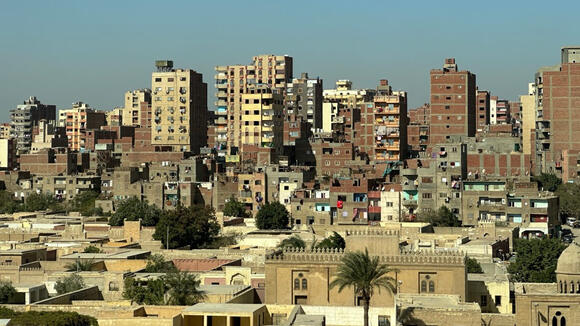
Cairo is a city of paradoxes, full of ancient historic sites and neighborhoods, modern suburbs, fantastic museums, delicious and exotic food, and colorful but chaotic and crowded streets. As part of a tour package to Egypt provided by Gate1 Travel, we spent several days experiencing all that Cairo has to offer.

Upon arrival, visitors may be overwhelmed by the city’s chaotic nature. Driving through the sprawling metropolis between the airport and the central city, where most hotels are located, you will see thousands of older, non-descript brown and beige mid-rise buildings, beautiful but decaying French influenced architecture, polluted waterways, masses of people everywhere, older cars and serious traffic congestion. Much of this is understandable given Cairo’s age (nearly 1,700 years old), and metropolitan population of over 20 million people. One needs to dig deeper (pun not intended) to truly appreciate what this historic city has to offer. There are many attractions worth visiting throughout this fascinating city, and we were only able to see a few of them. Our stay included visits to the ancient ruins of Giza, the Coptic Christian quarter, the souk within the Old Islamic district, and the amazing Egyptian museum.

https://img.particlenews.com/image.php?url=19UUiP_0kfR2agI00

Not all of Cairo is so chaotic. Modern, more orderly sections of Cairo can be found in the northern and eastern suburbs, complete with glitzy high end shopping malls, theaters, parks, new residential towers and a wide variety of restaurants and bars.

The Ruins of Giza – If there is one place on earth that mystifies humans to this day, it would have to be the Pyramids of Giza, built during the fourth dynasty of the Old Kingdom. While pyramids of different styles and sizes are located throughout Egypt, especially along the Nile, the largest are located in Giza. Giza is located on the west bank of the Nile River and the pyramids are located at its western edge. Visitors may be quite surprised at how close the pyramids are to modern settlements.

https://img.particlenews.com/image.php?url=4FE2bi_0kfR2agI00

The mammoth Great Pyramid was built around 2,560 BC as the final resting place for Pharaoh Khufu (the second pharaoh of the Fourth Dynasty), and no one is certain as to the construction techniques used. Standing at 481 feet tall, and built of 2.3 million blocks of limestone, each weighing 2.5 tons, the pyramid was constructed by roughly 100,000 skilled laborers over a twenty year period. Other nearby Pyramids include the tombs of Khafre and Menkaure, as well as many other smaller temples and tombs. The pyramids were more than a grave for the Pharaohs. They were also built to facilitate a successful afterlife for the king so that he could be eternally reborn. This is why many of the pharaohs belongings were buried with them. If only I could travel back in time to witness the pyramids at the time of their construction, covered in a smooth white limestone finish and topped with gold block.

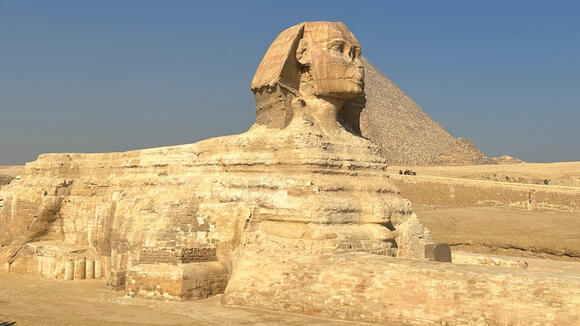
A visit to the nearby great sphinx of Giza is also a must. This large statue with the head of a human and the body of a lion was carved from one huge piece of limestone. It was built during the reign of King Khafre, around 2500 BC.

https://img.particlenews.com/image.php?url=4Nso47_0kfR2agI00

Saqqara – Twenty miles south of Cairo is Saqqara, where the burial grounds for the ancient Egyptian capital of Memphis are located. It is here where the oldest stone building complex exists – the Pyramid of Djoser, built in approximately 2,700 BC. This 200 foot tall pyramid is also known as the Step Pyramid because of its’ layered wedding cake shaped formation.

https://img.particlenews.com/image.php?url=33Clg3_0kfR2agI00

Egyptian Museum – Any visit to Cairo would not be complete without seeing the Egyptian Museum, which holds the largest collection of ancient Egyptian antiquities in the world. The museum is located in Tahrir Square on the east bank of the Nile River. Housed in a Neoclassical building dating from 1902, the museum’s two levels have over 136,000 items on display. We were amazed walking through the massive space, seeing up close a full display of all things Egyptian. The collection includes large scale stone works of statues, reliefs and architectural elements, papyri, coins, textiles and sarcophagi. Items are arranged chronologically from the pre-dynastic to the Greco-Roman period. There are two rooms containing mummies of kings and royal family members of the New Kingdom. Our highlight was touring the relics from the tomb of King Tutankhamun (Tut), including his golden mask and throne.

A new museum called the Grand Egyptian Museum, is being built in Giza, anticipated to open in 2023. It will have the largest, most complex collection of ancient treasures and artifacts in the world. Many of the relics from the current museum, including all relics related to King Tut, will be moved to the new museum. A 3,200 year old statue of Ramses II will greet visitors at the entrance.

https://img.particlenews.com/image.php?url=0MaUjA_0kfR2agI00

Coptic Cairo – About ten to twenty percent of the population of Egypt are Coptic Christians who adhere to the Coptic Orthodox Church. Copts speak the Coptic language, a direct descendant of the ancient Egyptian language. They are said to be the closest blood line to the ancient Egyptians because they did not marry outside the religion after the Muslim conquest of Egypt in the 7th century. Part of Old Cairo, the Coptic area encompasses the Babylon Fortress, the Coptic Museum, and a number of Coptic and Orthodox churches dating from nearly 1,700 years ago. Most of the sites are within the enclosure of the Babylon Fortress which was built by the Romans around 30 BC with the arrival of emperor Augustus. The Coptic Museum holds the largest collection of Coptic Christian artifacts in the world, including metalwork, stonework, woodwork, textiles and manuscripts.

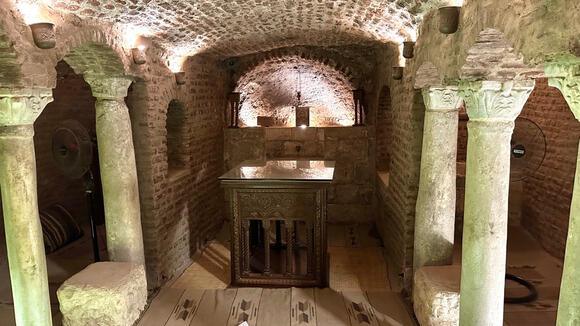
When King Herod of Judea ordered all firstborns to be killed, the Holy Family fled to Egypt. The crypt where they are said to have sought temporary refuge can be found beneath Abu Sarga, also known as the Church of St. Sergius and Bacchus (two Roman soldiers and martyrs), built in the 4th century CE. It is the oldest church in Egypt, and the crypt contains a domed ceiling, nave, and baptistery.

The Hanging Church, so named because it’s nave is suspended over a passage to the Babylon Fortress, was built around 690 CE, replacing earlier versions. It is one of the earliest churches in Cairo and includes over 100 beautiful icons and mosaics.

https://img.particlenews.com/image.php?url=0YfdJj_0kfR2agI00

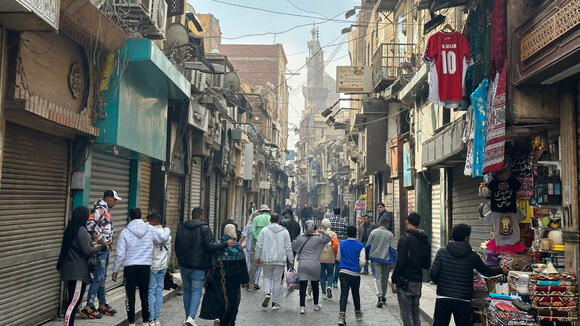
Old Islamic District – Located within the historic Islamic district of Cairo is the crowded and colorful Khan El Khalili souk (marketplace) that dates to the 14th century. The huge market is the perfect place for maximizing your senses of sight, smell and sound. The market contains hundreds of vendors selling pretty much everything, including antiques, gold and silver jewelry, spices, perfumes, clothing and carpets. We saw many interesting sites including a number of mosques with their towering minarets and medieval Islamic architecture. Nearby Al-Hussein Mosque is one of the largest, and is considered one of the holiest Islamic sites in Egypt.

https://img.particlenews.com/image.php?url=3KK3Lc_0kfR2agI00

While strolling through the narrow winding alleys of the souk, you get the feeling of being in medieval Cairo. One memorable moment is when I glanced to see a young man balancing a huge platter of freshly baked bread on his head while riding a bicycle. There are many restaurants and coffee houses where you can try Arabic coffee or hibiscus tea, and smoke shisha from a hookah. Hibiscus tea, also known as Karkadéh, was the preferred drink of the pharaohs, and the beverage is still popular today. We were greeted at many restaurants and shops with this delicious drink. The tea is made by boiling the hibiscus flower, and the drink has a bright pink color. Fishawi’s Coffee Shop, open since 1773, is the oldest coffee shop in Egypt.

Post written by Steve Sindiong

camel-pyramids
Africa

Egypt – An Ancient Country of Contrasts

I recently took my first trip to amazing and colorful Egypt, the land of Civilizations. This fascinating country has plenty to offer, including jaw dropping 5,000 year old temples and ruins, fantastic museums, beautiful natural scenery, ancient and modern cities, delicious food and friendly warm people.

Our trip consisted of two key components, including spending time in the capital and largest city, Cairo, and spending four days on a river boat along the Nile River between Luxor and Aswan. An overview of each is provided in the following separate posts.

Cairo – A City of Sensory Overload

A Scenic River Cruise Along the Nile

How to Tour Egypt

I would recommend that any traveler to Egypt use a good tour group at this time, rather than traveling on their own. Tour groups in Egypt are required to use security personnel. In addition, a tour group takes care of all transportation, hotels, meals, entry fees at attractions (thereby allowing you to bypass long lines) and use tour guides who are experts at providing information about all of the historic sites as well as managing daily logistics. We used Gate1, a tour company that I have used on several other trips. Gate1 offers a wide variety of air and land tours throughout the world at a reasonable price. Their tours include international and domestic transportation, varied and interesting itineraries, optional excursions and good to excellent lodging and dining. In Cairo, we stayed at the Marriott hotel, one of the best hotels in the city, located on Zamalek Island.

Our tour manager and guide, Rania, was excellent. She took care of all 30 of us from the beginning to the end of the trip, especially when some of us became ill from food poisoning. With her degree in archaeology, Rania was an expert Egyptologist, providing an in-depth history of each of the sites we visited, including a description of the hieroglyphics. She also provided information on modern Egypt, including the recent and current politics, social issues, and overall logistics.

Entry and Exit Requirements – American visitors to Egypt are required to have a valid passport with one or more blank pages, and a Visa. Visas can be purchased upon arrival at Cairo International Airport for $25 or can be purchased online ahead of time. All tourist visas are valid for 30 days.

The People

The population of Egypt is approximately 100 million people, and most of the population is concentrated in Cairo, Alexandria and along the fertile Nile Valley.  Egypt has a long history of being invaded by various cultures over thousands of years, including the Romans, Greeks, Persians, Arabs, British, French and other groups, resulting in a multi-cultural modern Egyptian society. The vast majority of the population are Sunni Muslim, while about ten to twenty percent are Coptic Christians who adhere to the Coptic Orthodox Church. Copts speak the Coptic language, a direct descendant of the ancient Egyptian language. They are said to be the closest blood line to the ancient Egyptians because they did not marry outside the religion after the Muslim conquest of Egypt in the 7th century. Nubians are an ethnic group mostly concentrated in southern Egypt near Sudan, who speak Nubian languages. Nubian villages are characterized by their brightly painted stucco walls, decorated with colorful symbols and patterns.

People in Egypt are generally friendly, hospitable, and helpful. Most people speak varying dialects of Arabic, however English is widely spoken since Egypt was formerly a British colony.

A group of Nubian women

Food and Drink

Egypt has delicious food, including excellent breads, kofta (spiced minced beef), kebabs, falafel, dips including hummus, labneh and ful nabed, and middle eastern style pastries. One of my favorite dishes is Kushari, a filling platter of rice, macaroni, and lentils and topped with tomato sauce, chickpeas and fried onions. It’s pure Egyptian comfort food. Most hotels also offer western style dishes, including the breakfast buffet. Egyptian coffee is prepared with a mixture of sugar, finely ground coffee and hot water. The grounds are not filtered, but rather allowed to settle prior to serving. Hibiscus tea, also known as Karkadéh, was the preferred drink of the pharaohs, and the beverage is still popular today. We were greeted at many restaurants and shops with this delicious drink. The tea is made by boiling the hibiscus flower, and the drink has a bright pink color.

It is paramount that you don’t drink tap water during your stay in Egypt. Hotels and tour bus operators will provide bottled water daily, which should be used for drinking and when brushing teeth. Food that is cooked is generally fine, but avoid street food, and raw food items such as lettuce, and fruits and vegetables that have been washed or not peeled. Even when taking precautions, out of our tour group of thirty, about six of us still became mildly ill for a few days.

Lunch at a Nubian restaurant

Money and Tipping

In Egypt, both dollars and Egyptian pounds are accepted. However, because of the current heavy fluctuation of the Egyptian pound, many people prefer dollars. As of January 2023, one Egyptian dollar equaled .033 US dollars. Before arriving in Egypt, make sure to bring enough single US dollars for tipping. Tips are generally provided to bus tour drivers ($2 per day), tour guides ($8-$10 per day), baggage attendants and public restroom attendants ($1 for two to three people). At restaurants, tipping is generally about 10 to 15 percent of the bill. If you take photographs of people, such as camel owners, expect them to ask for a tip.

Souvenirs

Some of the best locally made items to buy include perfumes, oils and scents, cotton scarves, galabeya (loose gowns worn by both men and women), papyrus, spices, dates, alabaster, silver and gold jewelry and carpets. Adjacent most of the temples and ruins are tourist markets where aggressive vendors will try to sell souvenirs. Souvenirs can also be purchased in the main markets, and at stores. In the markets, if you are not interested in purchasing, it is best to avoid eye contact with or respond to vendors. Once you speak to them, they will harass you, walking with you along the way. If you are interested, make sure to haggle with them – it is expected. Many souvenirs are not actually made in Egypt, but are rather cheap knock offs, so make sure to examine them carefully.

Post written by Steve Sindiong

amalfi
Europe

Sorrento & Amalfi: Discover the Hidden Gems along your hike

Upon planning a trip to Italy, most individuals fill their itinerary with crowded cities or wineries showcasing the finest aged wine. While these account for a large portion of the country’s tourism due to their charming stature and gripping architecture, there is more to the country beyond these typical destinations. On our slower-paced walking tour through the regions of Sorrento and Amalfi, travelers can experience a mixture of hilly terrain and coastal views while also indulging in cultural tours giving a behind-the-scenes look at Italy as a whole.

Although Italy’s coastal towns have picked up in tourism over the years, exploring these provinces by foot gives travelers a more authentic feel for the country and educates visitors on the sophisticated production of various cooking bases that contribute to the country’s full-flavored cuisine. On this tour, experience the vintage pull of these towns that appear as a polaroid picture brought to life.

A Hike With Views of the Mediterranean

Any successful hike must be paired with breathtaking views, and Sorrento’s hiking options are no different. As you begin to explore this country by foot, start out in the resort town of Ravello. This classy summertime retreat is home to cliffside gardens and stunning sunset views. Visit Villa Cimbrone, a 12th-century villa showcasing unrivaled views of the Mediterranean at any point in the day.

Although the calming atmosphere of this sophisticated village might tempt you to check in for the night, don’t pass up the opportunity to take a hike through Ferriere Valley, a nature reserve with promising views year-round and rare species candidly posing for photographs. Enjoy a picnic lunch before continuing your hike to the end-point of Piazza del Duomo in Amalfi, an open space with a cathedral and sculpted statue.

An Immersive Encounter With Olive Oil

Your walking tour continues in the idyllic village of Nerano, leading onto the Bay of Ieranto on a path rounding a mountain. On your way, your group will make a pit stop at an olive grove for a historical perspective of the surrounding villages. After a brief intermission, your hike will continue down aged rocky stairs to the Bay of Ieranto, where you’ll be able to indulge in a mid-day swim to recover from a day’s worth of walking.

Staying on theme with the day’s prior teasing of olives, your afternoon will consist of a deeper dive into the production of one of Italy’s favorite cooking staples: olive oil. Your group will visit an olive oil mill in order to grasp the phases involved in olive cultivation. Following this immersive cultural exchange, you’ll be able to taste this fresh olive oil with your group members, further understanding why it is a favorite ingredient of many.

Capri, The Path of Gods, and Lemons Galore

While in the Sorrento region, it would almost be offensive not to visit the island of Capri. Despite its rise in tourism, this beautiful island is a worthwhile addition to the trip. Avoid the tourists by hiking along the Pizzolungo trail to gain celebrated views of the coastline and Natural Arch.

The following day, your group will be transported to Bomerano, home of one of the most famous hiking trails known as the Path of Gods. Throughout this rocky seaside hike elevated above the colorful village below, you’ll be met with panoramic views of the region that the average tourist doesn’t get to see.

Just as Paris can’t be visited without indulging in a crepe, the Amalfi coast cannot truly be experienced without sampling one of the locale’s zesty lemons in some embodiment. For this reason, your hike will end in a trip to Tramonti, home of a lemon grove where the Amalfi lemon is produced. Indulge in the locally-grown fruit and taste the delightful lemon sherbet for a refreshing afternoon snack. While enjoying this local favorite in the afternoon sun, your group will also be welcomed by local entertainment, with dancers performing the “tammurriata,” a folk dance of Campania.

Final Farewell

Must all good things come to an end? To close out your unique tour of Italy, you’ll arrive in the small town of Termini, one of Sorrento’s least-explored boroughs. Even though the town does not attract much media attention, it has an inviting call to the slower-paced travelers. Spend your morning journeying to the lighthouse of Punta Campanella. You’ll be able to trek through an ancient Roman road in pursuit of the lighthouse, also spotting temple remains and scenic views.

As your day begins to conclude, you’ll embrace the country’s locally-sourced ingredients once more, stopping at Fossa di Papa farm for a final farewell dinner made from seasonal products.

Sea-Lion-Galapagos
Gate 1 ConnectionsLatin America

Experience An Ultimate Trip to the Exotic Galapagos

It’s no surprise that visiting a destination as unique as the Galapagos Islands would also entail a unique travel experience in order to experience them. Yet that very prospect awaits erstwhile travelers who come to this remote archipelago looking to immerse themselves in the varied natural wonders on display. To best appreciate the destination, let’s take a look at the overall experience. Only then can the full appeal of this bucket-list locale be truly understood.

Make The Most of Your Gateways

The only commercial flights in and out of the Galapagos Islands are from the mainland Ecuadorian cities of Quito and Guayaquil. Even on a short trip, taking a few days to explore these vibrant cities before and/or after your stay in the Galapagos will add a very enjoyable dimension to your itinerary. You can either bask in the historic charm of UNESCO World Heritage Quito, with its colonial era churches and architecture, or have some fun in the modern metropolis of Guayaquil, with its resplendent Malecon 2000 and colorful Las Penas neighborhood. For a taste of both old and new, why not try a combination of both?

Touring the Islands

Arriving at the island of Baltra, visitors to the Galapagos have essentially two options: board a cruise ship or yacht to explore the archipelago, or concentrate your time on a select few destinations. For budget-conscious travelers, the latter is by far the most practical option—one that will still allow for meaningful experiences that encapsulate the characteristic sights and activities that make the Galapagos a world-class destination.

Santa Cruz

Practically adjacent to the gateway airport on Baltra Island, the island of Santa Cruz is host to some wonderful volcanic scenery and nature-focused activities. Most visitors will at some point either stay in or pass through the town of Puerto Ayora, situated on Academy Bay along the southern coast of the island. Nearby is the Charles Darwin Research Station, a must-see attraction where visitors can gain greater insights on the unique flora and fauna found only in the Galapagos, along with up to date information on current conservation programs.

Day Trips

From Puerto Ayora, guests can embark on a variety of day trips to visit surrounding islands—each with their own appeal. A popular trip is out to tiny Bartolomé Island, with its signature feature—Pinnacle Rock. Surrounded by beaches suitable for swimming and snorkeling, you might see turtles, sea lions, several types of sharks and rays, and even a small penguin colony in the shadow of this spire of lava rock jutting up from the shoreline. Another popular day trip is a visit to North Seymour Island. This low-lying land-mass is teeming with wildlife—boasting large colonies of frigate birds, iguanas, and blue-footed boobies.

Practical Details

As was mentioned before, visiting the Galapagos is not your everyday adventure. With that in mind, some practical tips will help you enjoy your trip to the fullest.

One of the most appealing aspects of the Galapagos Islands is their remote, unspoiled and undeveloped nature. In practical terms that means that at times getting to these amazing locations will require a measure of stamina, often crossing through uneven terrain. Those prone to seasickness would do well to bring medicine with them (and take it before getting on a boat) and be sure to have your camera equipment fully charged and ready for wildlife encounters that can arise at any given time.

The Galapagos Islands lie along the Equator, so air and water temperatures are relatively stable all year long, with the coolest months being June through November. As a national park, there are associated fees specific to the islands, though when traveling with a reputable tour operator such details are generally included in the price. And while on the subject, having at least some of your activities led by a knowledgeable guide who speaks your language will greatly enhance your overall experience.

The Galapagos is a bucket-list destination for those who love nature, animals, diving and anything related to ecology. With some forethought, dedication and the assistance of a knowledgeable tour operator, you can experience this natural wonderland with minimal hassle and make your experience the ultimate trip to the Galapagos Islands.

Amazon-rainforest
Gate 1 ConnectionsLatin America

An Adventure Through Ecuador and the Amazon

Ecuador has long been known as a premier destination for soft adventure. With a landscape ranging from towering volcanoes to steamy rain forest to island archipelagos, opportunities for meaningful interaction with its natural wonders are inevitable. However some adventure seekers are unaware of one of Ecuador’s most appealing features: these varied terrains are all in close proximity with each other. The following is a rundown of some of the incredible natural diversity Ecuador has on offer, all within a compact itinerary.

Quito

Most leisure visitors arrive to the country via Ecuador’s vibrant capital, Quito. Not only is it worth spending a few days here to acclimate to the high altitude, but the historic and cultural attractions demand some attention. As a UNESCO World Heritage Site, you’ll love exploring the historic center’s cobblestone streets dotted with ornate churches and colonial Spanish architecture. During the day you can take a trip up the Teleferiqo—a cable car that will bring you to even greater heights to view breathtaking (both literal and figurative) panoramas of the city. Have a bite to eat or do some browsing at the many cafes and shops that line the charming city squares. And after nightfall, a visit to La Ronda—a narrow street brimming with restaurants and live music—is an essential experience.

Otavalo

Just a two hour ride north of Quito, you can immerse yourself in Andean culture at the market town of Otavalo. Surrounded by imposing volcanoes, your attention will be divided between the natural beauty and the tempting offerings at the famous Otavalo Market. Here you’ll encounter locals in their indigenous dress, and have the option to purchase some of the colorful textiles that are characteristic of the region.

Papallacta

One of the great benefits of traveling through Ecuador, is the abundance of things to see in between destinations. The small alpine town of Papallacta is a great example of this. Located at the juncture where the landscape transforms from alpine to jungle, Papallacta is famous for its thermal pools. Guests can soak in both the water and the scenery, for a tranquil oasis where the mountains begin their descent to the endless canopy of the Amazon Rain Forest.

Punta Ahuano and the Amazon Jungle

This small village on the banks of the Napo River is the gateway to Ecuador’s portion of the famed Amazon Basin, and a great starting point for explorations of this unique ecological treasure. A highlight of a visit to the Amazon is the chance to stay at one of the many ecolodges that are tucked away in the dense jungle—most only accessible by boat. Guests are taken on several wildlife viewing tours, usually via motorized canoe. This allows you the chance to get up-close and personal with a wide array of jungle denizens, from monkeys to macaws, anteaters and sloths, countless birds and the occasional pink river dolphin. And at night, the sounds of the jungle will lull you to sleep with a gentle cacophony of insect song.

Baños

After the slow pace of the Amazon, a trip to the tourist town of Baños will get your blood pumping again. Not only is it a great place to revel in Ecuador’s natural beauty—with some 60 waterfalls nearby—but it also has on offer a wide gamut of adventure activities such as whitewater rafting, kayaking, canyoning as well as the iconic ‘swing at the end of the world’. A visit here is a great way to sample the plethora of activities Ecuador possesses, and leave you in anticipation of your next visit because there’s still so much left to see and do.

There are many locations across the planet that showcase natural beauty, varied terrain and soft adventure opportunities. But few, if any, can match Ecuador’s wealth of attractions in such a small area. A visit here is a visit to some of the planet’s greatest ecosystems, and the best part is that you’re never more than a short flight or bus ride away.

Budapest
EuropeGate 1 Connections

The Best of Central Europe: What to See & How to Do It

Europe has its cities of glitz and glamour that typically draw in crowds of tourists. From posh Paris to historical Rome to seaside villages, some locations are more notorious than others. Central Europe rarely gets the same amount of attention, yet its inherent magnetism and subtle culture become apparent to all those wishing to discover traditions and lifestyles that dig deeper than they first believed.

Traveling through Europe means ditching preconceived notions and allowing the countries to do the talking. Tourists of all kinds have flocked to these countries in search of something more, whether backpacking through various cities, staying in 5-star hotels, or crashing in hostels full of eager young foreigners. Each form of travel has its own perks and unique features, but a favorable option for experiencing central Europe is a Danube river cruise.

How to Do a Trip Through Central Europe

Embarking on a river cruise through central Europe will journey you through some of Europe’s most characteristic cities, all while giving you a home base that doesn’t skim on any amusement. Travelers are given accommodations and tailored amenities as they cruise down a route delivering them to a mix of capital cities and characteristic small towns making up the allure of central Europe. This sort of travel experience not only immerses tourists in the rich heritage these countries offer but also puts them in the hands of knowledgeable cruise directors, activities hosts, and local tour guides intent on making their trip even more authentic.

While hopping on board a river cruise through central Europe with Gate 1 Travel, travelers will also be celebrated with a glass of wine or beer accompanying each dinner, a breakfast buffet each morning, a fitness center, a chic lounge, and locally-inspired recipes adding to the European experience. Get a blend of custom-fit accommodations and off-shore excursions through these hand-picked destinations.

What to See in Central Europe

Begin Your Travels in Budapest

As far as land excursions go, Budapest is one of the most entrancing cities tourists can find themselves in. From medieval architecture to a pristine city center spa to floods of greenery, Budapest has a mixture of history and modernism that reflects its people well. During your wanderings, you can experience both a Royal Palace and a downtown aura within the span of one day. Perhaps you’ll do as the locals do and take part in the amenities offered at the Gellért Baths, an illustrious spa and swimming center in the heart of the city, a venue that was originally brought to construction over a century ago. Browse through the various locally-owned shops and dapper cafes lining the cobblestone streets before stepping back on the boat for the remainder of the evening.

A Hidden Gem Between Hungary and Austria

Often cast in the shadow of the more largely-recognized cities of central Europe is the diverse country of Slovakia, a landlocked country bordering the tops of Hungary and Austria. Small but mighty, this country is roaring with culture, especially when it comes to its capital city of Bratislava. This pedestrian-only city is made to feel much more historic without traffic congestion, but it has plenty of lively contemporary features, especially pertaining to its nightlife.

Throughout the day, visitors can approach the coronation sites of Hungarian kings and explore landmarks such as the Bratislava Castle. Make your way through the city’s streets and engage in the dining atmosphere before eating a local meal on your vessel.

Venture Through Vienna

As your river cruise progresses, you’ll be brought to the romanticized city of Vienna, a destination that has gone on to inspire many and produce some of the most notable figures of history, such as Beethoven. Although it is one of the more mainstream stops in central Europe, this picturesque port of call has much to offer its visitors, especially in terms of music. As you stroll through the city, expect to be impressed by the baroque architecture and lovely public parks.

Because of the city’s deep roots in classical music and the composers it produced, travelers are encouraged to dress in their finest attire and attend a concert performance celebrating the classical masterpieces of Mozart and Strauss, two of the city’s prominent figures. If a concert isn’t in the cards for you, it is recommended to at least swing by the Vienna Opera House for a taste of its musical culture.

More of Mozart

For classical music enthusiasts wishing to dig deeper into the rich history of early composition, they can choose to journey further to Salzburg, Mozart’s birthplace and the setting for the famed musical The Sound of Music. Wander through the region’s historic sites and filming locations, gaining a deeper introspection of the backdrop of these musical masterpieces. From palaces to cemeteries to cathedrals, Salzburg does not skim on historic preservation. Perhaps you’ll even choose to visit Mozart’s home, which has now been revamped into a museum housing the very instruments he practiced with in his childhood years. Stepping foot into the heart of European history and ending each day with locally-inspired meals is a favorable way to experience central Europe. One can expect each day to greet them with a new slice of culture mixed with baroque architecture and significant historical sites promising to fill even the densest scrapbook.

kebab
AfricaGate 1 ConnectionsMediterranean

Egyptian Cuisine: Must-Try Dishes

As you parade through a mixture of modern Egypt and the ancient marvels it beholds, you’ll work up an appetite for the cultural-rich menu that the country has to offer. Tourists may come searching to uncover the secrets of the Sphinx, peer at the Pyramids of Giza, and hitch a ride with a camel, but their mouths will discover an underrated not-so-secret treasure of its own within Egypt’s food scene.

While Egypt will present a bit of a culture shock to unfamiliar travelers, it is best to sink into this uncharted territory mouth first, indulging in the always-open invitation that eateries add to a travel destination. Don’t shy away from eating outside of your comfort zone. Instead, make it a priority to sample the following must-try traditional dishes throughout the duration of your trip.

Kofta Kebabs

Kebabs are a famed dish throughout Middle Eastern and Mediterranean territories that have crossed over cultural boundaries and influenced the cuisine in a multitude of countries. So why try this dish in Egypt? Egypt’s take on this favorite food is a much more traditional one, bearing the name of kofta kebabs. This dish is comprised of spiced lamb or beef that is rolled onto a skewer and grilled over coals, meshing the flavors together to result in a handheld delectable meant to be savored. You’ll find that many locals choose to pair this charcoal-broiled meat with a side of fresh salad, vegetables, or flatbread.

Koshary

If you desire to dig deep into the local living of modern-day Egyptians, then look no further than one of their favorite dishes: koshary. Comprised of rice, macaroni, lentils, chickpeas, onion, and a tomato-vinegar sauce, this national dish is a restaurant specialty, street food phenomenon, and a hot ticket to fitting in with the locals. The dish essentially mixes together staple ingredients that would be found in any individual’s pantry, resulting in a tasty masterpiece that fits anyone’s budget. The inventive mixture of these otherwise-scrapped ingredients to create this beloved dish might first remind one of an episode of Chopped, where seemingly contradictory elements can be reworked into a palatable result. However, the Egyptians yet again prove that they were experts at these kitchen fundamentals far before the rest of the world caught on.

You might hear some differing opinions as to where the best koshary can be found. As with all destinations, the locals know best. Strike up a conversation with a local, whether through speaking a common language or making use of a translator tool, in order to seek out their best recommendations. Oftentimes, they’ll point you in the direction of a restaurant specializing in this dish, where you’ll be sure to find one of the best renditions of the recipe.

Ta’ameya

Middle Eastern cuisine includes heavy use of chickpeas, a high-protein legume that can be soaked and simmered, roasted, or thrown in a pressure cooker. Eaten alongside meals or developed into a creamy consistency as a hummus, chickpeas have grown a stellar reputation for their multi-use capabilities. One such recipe that uses chickpeas as its base is falafel, fried street food popular throughout the Middle East. Egypt, however, has its own spin on this recipe, known as none other than ta’ameya.

Ta’ameya is Egypt’s take on falafel. While some still experiment with the chickpea base, ta’ameya differentiates itself by being made from crushed fava beans. Mixing this bean paste together with flavorful ingredients and coating each ball in sesame seeds, these snacks are then emerged in hot oil and fried to a crispy finish. Many Egyptians enjoy this as a breakfast dish, but you can find them being made fresh along many streets, paired often with tahini sauce.

Hamam Mahshi

If the previously-mentioned countrywide dishes haven’t challenged your comfort zone yet, then this meaty main dish will likely do the job. Hamam mahshi is a traditional dish with its roots stemming back ages in Egypt. The central aspect of this recipe is a stuffed pigeon, recognized as a delicacy throughout the country and served as a main dish at important events such as wedding ceremonies. In preparing this dish, the cooks stuff the small pigeon with freekeh, a type of green wheat bearing a nutty flavor, and grill the squab over a wood fire until it reaches a golden brown color.

Indulge in a ritzy meal with cultural significance by ordering mahshi while dining in Egypt. This unique flavor will likely rival all the other meals and savory nourishments you sample your way throughout the country, giving you an authentic taste of the culture that cannot be found elsewhere in the world. Egyptian cuisine, while not nearly as saluted in the mainstream travel industry as it should be, is a complex blend of comfort foods mixed with fresh flavors. Despite its lack of representation in the larger food scene, all who have sampled these dishes have come to develop an eager hunger for this genre of cooking, one that is often difficult to satisfy unless returning to the country of these recipes’ origin.

pastel
EuropeTravel Tips

5 Local Foods to Try in Portugal

Crossing over a country’s borders means receiving an invitation to participate in their cultural traditions, fall into the rhythm of their everyday lives, and experience life as the locals would. Portugal’s pulse of zeal and timeless designs boast a heritage of individuality and a call to dig deeper into its unique European scene. Aside from its enticing walkable districts and incomparable pieces of architecture, Portugal is the dwelling place of an exquisite food sphere making a statement to all who indulge in it.

As one begins walking down the streets, they’ll be stricken with sweet aromas floating out of pastry shops, their scent awakening locals from their slumber. As the day proceeds, the restaurants become even more lively as residents and tourists alike participate in the al fresco dining atmosphere.

Between the multitude of pastry shops and open-air restaurants, your eating itinerary will be flushed with options. However, based on the cuisine sampled in our Portugal trips, we recommend moving the following five local foods to the top of your checklist.

Pastel de Nata

Ranking in the number one spot for many is the famous Portuguese egg custard tart pastry gracing the front windows of every pastry shop you’ll come across in your wanderings. Sold for not much more than one euro, these delectable desserts or additions to your brunch are a common artifact to come by in Portugal. But don’t let their widespread availability distract you from their authenticity. This Portuguese-native pastry is said to have been birthed in 1837 in the country’s capital city. Since then, local bakers and pastry chefs have put practice into recreating the original recipe, with each batch keeping the recipe’s origins alive. Yet, some have added their own twist to the pastry by sprinkling cinnamon or powdered sugar on top.

The complementary contrast of the flaky crust with the smooth custard creates a mouthwatering product that has kept locals and travelers returning for more. A day of exploring a Portuguese city would not be complete without having held this sweet in your hands at some point.

Sardinhas Assadas

Upon strolling through Lisbon or one of Portugal’s other noteworthy towns, you might happen upon a colorful sardine shop vending tin cans of this unorthodox cuisine. However, you’ll come to learn that the Portuguese have a special place in their hearts for sardines, as grilling these fish has become a comfort food of sorts for the locals. Throughout the summer, the locals often supply grilled sardines to serve as the main feature at festivals taking place. Charred to perfection and sprinkled with sea salt, the fish are then eaten while the bones and heads are still unimpaired, with individuals biting into their sides to feast on the flaky meat.

The Feast of St. Anthony lasts throughout the month of June in the country, but it has widely been nicknamed the “Sardine Festival” as this crowd favorite is served on buns to the event attendees. Whether visiting during the time of the festival or not, do as the locals do and dine on this seemingly offbeat snack.

Piri Piri Chicken

Roasted to perfection and packed with flavorful spices, piri piri chicken is a local favorite, with its origins stemming from African and Portuguese roots. The spicy chicken dish is carefully curated by homely chefs and served fresh to diners each evening. These chefs roast the chicken on the spit until it reaches a tender golden brown ideal for feasting on. Upon plating the succulent meat, a piri piri sauce is then sprayed over the dish to the diner’s preference.

To the locals, the spicy nature of the dish has become a common piece of their palate. However, for out-of-towners desiring a taste of this local specialty, a heavy dose of the piri piri sauce can send their taste buds into shock, as the true spice hits moments after. Just as the dish is best prepared with time and attention given to the process, also apply this same routine to the action of consuming the chicken, slowly diving into the peppery seasoning while allowing your taste buds the proper time to readjust to each bite. Many recommend trying this dish your first night, as you’ll likely crave it at least one day more during your travels.

Bacalhau

In terms of dining, Portugal offers a pretty expansive list of offerings, especially in the seafood realm. Bacalhau is another of the nation’s beloved fish fares and is categorized as dried and salted cod. This national dish has become quite common among the locals’ diets and is a staple menu item of various fine dining establishments in the region. By drying and salting the cod, the flavor is intensified, and many chefs fancy enhancing their dishes with overlaying ingredients, vegetables, and spices. Thousands of bacalhau recipes have emerged from the country, giving tourists bountiful chances to dine on this delicacy. Compliment the chef on their special touch to the cuisine.

Port Wine

Although technically a drink rather than a food, port wine is one of Portugal’s specialties that must be savored on any visit to the country. Especially if making the journey to the country’s second-largest city of Porto, which contributes to the vast majority of port wine production, visitors must drop in on one of many wine cellars and venture to Douro Valley to sample this sweet red blend. After being produced from this valley’s grapes, port wine is often served at the end of meals to finish the dining experience on a sweet note. While dining out and about throughout your travels, commit to the full Portuguese experience by adding this nightcap to your tab.

Lisbon
EuropeTravel Tips

How to See the Best of Lisbon in One Day

Gaining traction among its European counterparts is the alluring city of Lisbon, rimmed with red-roofed buildings sporting azulejo tiles and cafés selling pastel de nata for close to one euro. Its weathered tiles and affectionate locals fill each city center and discreet alleyway with a welcoming presence beckoning travelers to wander further into the Alfama district or indulge in another late-night feast of piri-piri chicken.

It seems almost blasphemous to summarize the city’s offerings in the matter of a one-day itinerary. However, not all travelers have the luxury of staying in Portugal’s capital for longer than 24 hours. For some, Lisbon calls to them like a dream in the night, evoking their memories of the short span of time spent in this decorated city. If you also find yourself limited on time and want to see the best of Lisbon in one day, there are a handful of recommendations that you should consider adding to your day, as are visited in our guided Portugal trip.

Peer From a Coveted View

In order to feel as if you have explored an entire city, it is always recommended to find the best view potential of a destination. Lisbon’s mesmerizing city scene is attractive from any perspective, but Edward VII’s Park offers a unique, inclined aspect of the metropolis. From this vantage point, peer directly forward at the sharp-cornered landscaping work leading down to the Marquis of Pombal Square. Admire the far-off water and famed architecture home to none other than this inspiring country. From here, one of Lisbon’s most iconic sites stands a mere 15-minute car ride away.

Approach Belém Tower

Now classified as a World Heritage Site, the Belém Tower is a 16th-century staple of the city. In its earlier years, the tower stood as a fort for the city, protecting the capital against raids along the Tagus River. This medieval defense also served as a point of embarkation and disembarkation for the famous Portuguese explorers of the time, later being used as a point for customs control. Over the course of its existence, the structure has undergone restoration projects aimed at preserving the historical look of the building. Nowadays, Belém Tower stands as an iconic backdrop to Instagram photos and is a visited landmark of the city.

If exploring while there is a low tide, viewers can venture down the stairs and across the dampened sand, staring at the towering structure from a close standpoint. As you take in the views and reflect on your surroundings, you’ll likely have the additional romantic impression brought on by a local violin player entertaining tourists with symphonic pop tunes.

The Belém Tower is striking on its own accord, but its adjoining public parks and palms are just as worthy of exploring in the afternoon sun.

More Gothic Architecture

Despite its captivating influx of tiled buildings wearing hats of terracotta tiles, the enchanting city also shows evidence of gothic influence in various architectural hotspots, such as the Jerónimos Monastery. This former monastery located near the Belém Tower once existed as the headquarters of monks giving assistance to seafarers who were in transit. Both the building’s interior and exterior are a sight to behold, from its outer landscaping to its ornate ceilings coaxing visitors to tilt their heads back in awe.

Even though the grounds served a humble mission in its beginning years, the monastery has always symbolized the country’s wealth and power. To this day, the impressive sight tells of Portugal’s cardinal history and still continues to be the base for important government decisions.

Bonus: A Half-Day Tour to Sintra

Technically an hour train ride outside of Lisbon, Sintra is an unbelievably stunning area of the country that one must visit. This quaint town is home to lavish romantic castles and various monuments showering its municipality with royalty. Visitors can enjoy walking through the downtown region just a step away from the train station. Even though no trip would be a waste to this gorgeous district, it would be a misfortune to have spent half a day here without visiting at least one of Sintra’s castles.

Perhaps one of Sintra’s most noteworthy and mesmerizing highlights is Pena Palace, a colorful hilltop castle overlooking the lush terrain and countryside estates below. Not only do the outer surroundings of the palace allow visitors to freely roam the palace quarters as the royals once did, but it also contains one of the largest tile collections in all of Portugal. Peer out over the grounds from one of the various turrets and explore the rest of the domain at your leisure before hauling yourself back to the train station to return to Lisbon. Upon returning to Lisbon, don’t be tempted to cut your evening short after a day on your feet. Wander down the storied streets, get lost in the Alfama district, find the best local hotspot for piri-piri chicken, and soak in the evening atmosphere that comes alive each night as the sun sets on this exquisite city.