All posts by Gate 1 Travel

More of the World for Less

header-hills
Latin America

Living the Pure Life in Costa Rica

Costa Rica is a tiny, but eco-friendly treasure in Central America, full of beautiful scenery, wildlife, warm weather, friendly and welcoming people, a unique culture, and delicious food.

Pura Vida! It’s the unofficial motto of Costa Rica, as I learned from a recent trip. When in Costa Rica, you will hear this greeting from everyone, which basically means ‘Pure Life’. It’s used throughout the day as a greeting or expression, and is meant to describe a way of life. Costa Ricans are simply expressing that life is short, so be grateful for what you have. And Costa Ricans can be both proud and appreciative of what they have.

Costa Rica is an isthmus shaped country in Latin America, surrounded by the Caribbean on one side, and the Pacific Ocean on the other. It borders with Nicaragua to the north and Panama to the south. This very green and environmentally friendly country is blessed with rain and cloud forests, beautiful tropical beaches with warm water, mountains, volcanoes, hot springs, and an abundance of wildlife.

I recently took a 13-day trip that consisted of time spent in the capital, San Jose, as well as exploring the key tourist areas of Tortuguero, Arenal Volcano, Monteverde and Manuel Antonio National Park, which you can learn about in separate posts. While most tourists fly to San Jose, there are limited sites to see here. Our only time in San Jose included a tour of the central city, where we took a tour of the beautiful National Theater, completed in 1897. The opulent theater was built as a result of the country’s wealth from coffee exportation. Tours of San Jose, including the National Theater, can be purchased through Viator.

The National Theater in San Jose

Tortuguero National Park

Monteverde and Arenal

Manuel Antonio National Park

How to Tour Costa Rica

Travel to Costa Rica can be done as part of a tour group package or on your own. A benefit of using a tour group is that all transportation, logistics, hotels, entry fees to attractions, and expert tour guides are provided, making your travel easier and less stressful. However, using a tour group means that you are restricted to visiting only the places and attractions as part of a set itinerary.

We used Gate1, a tour company that I have used on several other trips. Gate1 offers a wide variety of air and land tours throughout the world at a very reasonable price. Their tours include international and domestic transportation, varied and interesting itineraries, excellent tour guides, optional excursions and good to excellent lodging and dining. This particular tour was broken into three segments, with tours ranging from seven to 13 days. Those of us who booked the 13-day tour went to San Jose, Tortuguero, Arenal, Monteverde, and Manuel Antonio. A 10-day segment skipped Tortuguero, while a seven day segment skipped both Tortuguero and Manuel Antonio.

Our tour manager and guide, Geovani, was excellent, and we enjoyed his laid back ‘Pura Vida’ disposition and great sense of humor. He handled all of the logistics for the three different tour segments, and provided an in-depth overview of the history, wildlife and social aspects of Costa Rica at every site we visited.

Our tour manager at Arenal Volcano

Traveling on your own will require using public transportation, or renting a vehicle, such as an SUV. Costa Rica is generally a safe country, so traveling alone is generally fine, as long as you use common sense, such as not flashing valuables. Roads are generally in good condition, and apparently much better than they were even twenty years ago. Some of the rural areas, such as near the Caribbean near Tortuguero still have many unpaved roads. In addition, many of the roads and bridges are narrow. On one of our tour days, we had an interesting experience watching our expert motorcoach operator make various maneuvers, including backing the bus onto a hill in order to make a tight curve onto an adjacent one-lane bridge.

Costa Rica is an Ecological Paradise

Costa Rica was one of the first countries to make an effort to protect its environment, and today it is a world leader in environmentalism. This is evident when traveling throughout the country. Everywhere you go, you’ll see people living in harmony with nature. Unlike many developing countries, Costa Rica is clean and green. The country has made huge and successful efforts to preserve its forests, flora and biodiversity. Around a half million species are known to live in Costa Rica, which represents nearly 5 percent of the estimated species on earth. Nearly a third of the country has been preserved as national park land or wildlife preserves. The country has banned plastic shopping bags and recycling is heavily promoted. Many of the resorts are considered eco-lodges, where sustainable practices result in the least possible impact on the natural environment. All of these efforts have led to the country being a major ecotourism destination for people from around the world.

Sloths are common throughout Costa Rica

Entry and Exit Requirements

Entry to Costa Rica is allowed for tourists from all countries, and there are no special requirements related to COVID-19 for residents of most countries. American visitors are required to have a valid passport with one or more blank pages, and a return ticket dated no more than 90 days after arrival. A Visa is not required. The US Department of State keeps the most up to date information on travel to Costa Rica.

The Weather of Costa Rica

Costa Rica is a tropical country that has twelve different ecosystems and varying climate zones due to its varied topography. Because of its proximity to the equator, there is not a real winter season, and temperatures are warm year round. Average temperatures range from the high 70s to low 80s (fahrenheit). There are two seasons, including the dry season and the wet season, and each differs based on the geographic region of the country. In most areas of the country, the dry season lasts from December thru April, and is the most popular time for visitors. The wet season lasts from May thru November. The wet season usually experiences afternoon showers, but the benefit is the lower hotel rates, fewer tourists, and more active wildlife. One example is that the turtle nesting and hatching along the Caribbean occurs April through December. The Caribbean coastal area tends to be wetter and more humid than central valley and the Pacific. More information on the weather can be found here.

The Monteverde Cloud Forest is one of Costa Rica’s many eco-systems

The People of Costa Rica

Costa Rica is a small country, with a population of approximately five million people. Most of the population lives in the Central Valley, which includes the metropolitan San Jose area. While Spanish is the official language, many Costa Ricans speak English, especially in tourist areas. Costa Ricans use the term ‘Tico’ or ‘Tica’ to describe themselves. This is due to their linguistic tendency to add the diminutive ‘tico’ to the end of their words.

The country has a multi-cultural population that includes a mixture of European, Amerindian, African and Asian people. In addition, there are eight indigenous groups in Costa Rica that speak their own languages, and represent a little over two percent of the population.  Certain areas, such as along the Caribbean, have larger populations of African descent, most of whom came from the Caribbean islands such as Jamaica to work on cacao and banana plantations. There is also a large population (nearly 400,000) of Nicaraguans in Costa Rica, many of them unauthorized migrants, most of whom work in the agricultural and construction sector. More recently, there has been a large establishment of North American and European retirees throughout the country, and especially in the central valley. Our tour guide noted that many live in gated communities, where the roofs are typically made of tile rather than the metal style roofs that locals have.

People in Costa Rica are well educated and peaceful. The government spends a significant portion of its budget toward public education, and the country has no permanent standing army. The country’s constitution was amended in1949 to abolish the military, and the budget has been dedicated to security (police guard forces), education and culture.  The people tend to be friendly, well mannered, hospitable, and helpful. They also tend to be quiet, and non-aggressive. It was rare that we ever heard honking vehicles in the streets.

Costa Ricans enjoying a day at the park

Food and Drink

The food in Costa Rica is somewhat typical of most Latin American countries, and includes chicken, steak, and seafood. Arroz con pollo, or chicken with rice, is a popular and tasty dish. Rice and black beans (gallo pinto) are a staple and served with most meals including breakfast. Delicious sweet plantains are also a common side dish. Other typical dishes include olla de carne (beef stew), and sopa negra (black bean and vegetable soup). One of my favorite dishes that can be found at many restaurants is Casado (meaning ‘married’). It is a large plate that is served with a grilled main item such as chicken, and sides such as rice, beans, coleslaw or salad, and fried plantains.

Casado is a delicious plate of a variety of items

Fresh fruit, including bananas, pineapple, watermelon, papaya, and cantalope are almost always served at breakfast or for dessert. Fresh fruit juices are also available in most restaurants, and fresh coconut is sold at most markets. Other popular desserts include flan, tres leches (three milks) cake, rice pudding, and fruit filled empanadas.

In Tortuguero, on the Caribbean, we were served a delicious and refreshing local drink called Agua de Sapo (translated as Frog Water). It doesn’t have anything to do with frogs, but the name may be associated with the brownish color of the drink. The ingredients include brown cane sugar, ginger, water and lemon juice.

In most areas of Costa Rica, especially the more populated and urban areas, the tap water is perfectly fine to drink. Bottled water should be used in less touristy rural areas, especially closer to the Caribbean. On our tour, the only area where we were recommended to use bottled water was in the Tortuguero area. Within some national parks, such as Manuel Antonio, plastic disposable bottles are prohibited, so water or beverages should be poured into reusable water bottles.

Money and Tipping

In Costa Rica, both dollars and the local currency, the colón are accepted. Costa Rica is more expensive than other Central American countries, but slightly less expensive than the US. As of May 2023, one US dollar equaled 534.6 colón. The best exchange rates can be found at local banks such as Banco Naciona or Banco de Costa Rica. Local ATM’s can be found throughout the country and many dispense both colónes and dollars. Try to avoid exchanging at the airport, where exchange rates are not as good. Credit cards are accepted at most establishments, and I typically have them charge in colónes rather than dollars to lock in the current rate, and save on the conversion fee.

Before arriving in Costa Rica, make sure to bring single US dollars for incidental items. In general, tips are not expected in Costa Rica, but always appreciated. Restaurants generally include two additional taxes, including a 13% sales tax, and a 10% service tax (or tip). Make sure these are shown on the bill, and if not, then you can pay an additional amount. If they are shown on the bill, and you are provided exceptional service, additional tip amounts are welcome. Tips are also expected for some tourist related activities. Tips are generally provided to bus tour drivers ($5 per day), tour guides ($10 per day), shuttle drivers (10%), baggage attendants and public restroom attendants ($1 for two to three people).

Souvenirs

One of the best souvenirs to bring back from Costa Rica, either for yourself or friends, is coffee. Costa Rican coffee is some of the best in the world, and generally easy to pack. While it can be purchased pretty much anywhere, such as grocery stores and souvenir shops, the best can be purchased directly from a coffee plantation. Most of the coffee plantations export their highest grade quality coffee, but you can purchase it directly at the plantation for around $10 per bag. We purchased coffee from the Café Monteverde plantation. Other good items to buy include hot sauces (such as salsa lizano, a sauce used in many local dishes), organic soaps, wood carved souvenirs (many are brightly painted with intricate designs), jewelry, liquor (such as Cacique Guaro – made of sugar cane), and textiles.

Outside a souvenir shop in Sarchi

Post written by Steve Sindiong

Morocco
Mediterranean

Highlights from a Magical Tour of Morocco

Morocco’s diverse geography and rich cultural have made the country a fascinating place to explore. My recent Gate1 Travel tour took me inside the chaotic medinas of its vibrant cities, across the craggy peaks of the Atlas Mountains, into the sand dunes of the Sahara Desert and to windswept shores on the Atlantic coast.

 In medieval Fez, I learned about the country’s tumultuous past, while in modern Casablanca and Rabat I marveled at towering skyscrapers that will define its future as a modern power in Africa and the Middle East.

Here are some highlights from my amazing trip:

Rabat: A Mix of Old and New

Morocco’s modern capital city on the Atlantic Coast is also home to King Mohammed VI and the country’s parliament. Signs of the government’s progressive modernization efforts are everywhere. A futuristic-looking performing arts center is under construction on the city’s river front – not far from a bullet-shaped office tower that will be the second tallest building in Africa.

On a hilltop overlooking the Atlantic, Oudaia Kasbah is a 12th century military fort whose keyhole-shaped gate is considered one of Morocco’s most beautiful architectural masterpieces. After we paused to admire its intricate carvings of geometric forms, we headed inside where we sampled still warm bread from a community oven. The adjoining kasbah, with freshly whitewashed walls and bright blue doors, is now a fashionable residential and shopping area. From an open terrace above the ocean, we viewed Rabat’s twin city of Sale, a former base for pirate ships that terrorized European powers in the 1800s.

Another 12th century treasure is the still-unfinished Hassan Tower and the stubby columns that are all that remain of the Hassan Mosque. The opulent white marble Mausoleum of King Mohammed V, who secured independence from France, was built nearby, making this a must-see site in Rabat. Guards dressed as Berber warriors in red suits with white capes oversee the tomb on horseback — they don’t mind getting their pictures taken.

Volubilis: Rome’s Most Remote African Outpost

The ancient Roman city of Volubilis is now a glorious open-air museum in the rural countryside outside Meknes. Our local guide Magid led us through the ruins of what was the most remote Roman outpost in Africa. Volubilis flourished until the end of the 3rd century but was later stripped of many of its treasures by nearby villagers. Rediscovered in the 1900s, French excavations revealed a prominent city like Pompeii in Italy but overgrown with weeds, not covered by ash. Many of the site’s treasures are now displayed in Rabat’s archeological museum, but Magid pointed out several original mosaics. Look for storks nesting atop the still-standing Corinthian columns.

Fez: A Trip Back to Medieval Times

Visiting Fez is like traveling back in time. The old medina, known as Fes el Bali, is a labyrinth of a narrow winding walkways connecting medieval mosques, schools and palaces. Tiny stalls overflow with colorful items handmade by potters, weavers, tanners and carpenters who still practice their crafts much as their ancestors did long ago.

Claustrophobic, yet captivating, the medina is best visited with a local guide. Hassan, who grew up in the medina, kept us from getting lost and pointed out unforgettable historic sites.

Red carpets and crystal chandeliers mark the entrance to the shrine of city founder Moulay Idriss II, whose 9th century tomb (closed to non-Muslims) is surrounded by fragrant candle and incense shops. Attarine Medersa is one of the Islamic world’s oldest colleges, dating back to the 1300s. We explored tiny dorm rooms on the upper floors that are decorated with traditional zellije tiles and lacy stucco moldings. The rooms overlook a central courtyard that opens onto a popular square.

Morocco is also known for elaborate woodworking techniques used to make everything from doors to musical instruments. The beautifully renovated Nejjarine Museum, once an inn where desert travelers spent the night, showcases the delicate work of talented carpenters. The nearby Nejjarine Fountain is a fine example of Moorish tile work that must be touched to be appreciated.

We paused for a much-needed tea break in a carpet shop packed with a dizzying array of brightly colored and patterned carpets in every imaginable shape and size. We oohed and aahed as attendants rolled out a dozen beautiful Berber and tribal carpets at our feet as we sipped our tea.

At a leather shop, we climbed several flights of stairs to watch tanners dunking animal hides in honeycombed vats of dye. Fortunately, we received sprigs of mint beforehand that helped disguise the putrid smell of urine and dung, still used in ancient tanneries to produce supple leather goods in a rainbow of colors. The experience was unforgettable, despite the foul odor.

Erfoud: Through the Middle Atlas Mountains

A surprise snowfall in the Atlas Mountains altered our route to Erfoud and the Sahara Desert. Though we missed stopping at the country’s only ski resort at Ifrane, we saw plenty of snow-capped mountains as our driver wound the bus around some tricky hairpin turns.

Though the ride was long, we arrived in the dusty town of Erfoud near the Algerian border just in time for our first desert sunset. At the African-themed Kazbah Xaluca Hotel, which was one of my favorite hotels, mint tea and cookies awaited us — along with a spirited band of musicians. Traditional red adobe walls encircle an oasis of palm trees that shade an inviting swimming pool. We feasted on buffet-style meals in front of a wood-burning fireplace in the lodge-like dining room.

Sahara Desert: Sunset and Camels

Our day in the Sahara began at a fossil factory, where we learned about nautilus and cone- shaped Orthoceras imbedded thousands of years ago in the sedimentary rocks now scattered in the desert. Workers polish the rocks into jewelry as well as sinks and coffee tables, all of which are sold in the showroom.

A Berber guide, dressed in a traditional blue djellaba and head scarf, led us through nearby Rissani’s chaotic ancient souk on a busy market day. Inside, we dodged donkeys carrying produce, stopping to sample and learn about the fruit of the oasis — dates.

Despite a lovely, refurbished gate, the city seems little changed from the days when caravans arrived from Timbuktu. Travelers these days visit Rissani because it’s close to Erg Chebbi, one of Morocco’s largest sand dunes.

That’s why we were there. All 23 of us signed up for the optional desert tour that included a camel ride to view a desert sunset. No surprise — it was an amazing experience and the highlight of the tour and well worth the additional cost.

We left civilization behind after climbing into a half-dozen 4X4 vehicles for a surprise thrill ride. Our nomad-like drivers raced each other in the sienna-color dunes along the edge of the Sahara until we reached a tented camp for a festive lunch.

After devouring grilled chicken and fries, we were back in our vehicles, stopping briefly for some fossil foraging on our own in the desert. Then we sped toward a camel ranch that looked like a mirage at first. A jovial crew of men in traditional djellabas and headscarves helped us mount our camels (the easy part), warning us to lean back as the dromedaries stood up — back legs first and then the front. My camel’s jerky rhythm took some getting used to, but I soon relaxed enough to marvel at the sand surrounding us as we traveled single file up into the dunes.

The scene was surreal – mounds of sand sculpted by the wind into soft undulating waves that seemed endless.  After a short ride, we dismounted and climbed up a ridge with an 180-degree view of the sunset to come. Our guides snapped pictures of us in silly poses like throwing sand in the air as we waited for the orange orb to descend. The sunset was a near-perfect 10, but we were as happy as our camels to head back as the temperature plummeted.

Ouarzazate: Kasbahs and Ksars Meet Lawrence of Arabia

A camel ride is hard to top, but more fascinating desert scenery spread out around us as we traveled to the remote city of Ouarzazate. Nicknamed “the door of the desert,” the former French outpost is best known today as a sought-after location for movies. The epic Lawrence of Arabia was filmed there in 1962 as were more recent movies, including American Sniper, and scenes from TV’s Game of Thrones.

Visible for miles, the red-clay walls of Ait Benhaddou, a ksar, or fortified village, cling to a remote hilltop outside Ouarzazate. A popular movie backdrop, the ksar is one of the best-preserved examples of a remote stop on the trans-Sahara trade route to Marrakesh.

We climbed winding steps up to a lonely granary for panoramic views of the mostly treeless burnt-orange terrain. Now a UNESCO World Heritage site, the ksar’s crumbling earthen architecture dates to the 1100s. Locals still house goats and chickens there, while open-air shops, art galleries and coffee houses fill tiny rooms where desert travelers once found safe refuge.

Though many craft people sell their handmade goods at tourist attractions like the ksar, we also met crafts people almost everywhere we went, even in remote places. At photo stop on a desert hilltop, a family from a tent camp nearby came running toward us as soon as they saw our vehicles. As we took pictures, the woman and several young children set up their handmade camels and jewelry in the sand. It was a very poignant scene. Of course, we bought several camels.

Marrakesh: Morocco’s Merry Red City

We crossed Tichka Pass, the highest road point in the southern, rugged High Atlas Mountains, to reach the red city walls of Marrakesh. Once a desert oasis, the city is now the country’s most popular tourist destination as well as the heart and soul of Morocco. (The kingdom’s name was derived from the city’s own.)

High Atlas Mountains

Snake charmers mingle with Berber musicians, jugglers, fortune tellers and juice sellers in the old city square of Jemaa el Fna. Merriment and chaos reign, particularly after dark when the square resembles an open-air circus. Tiny stalls overflow with colorful pottery, medicinal herbs, leather goods and delicate boxes made from aromatic sandalwood and cedar.

The medina is a UNESCO World Heritage site, dominated by the towering minaret of the Koutoubia Mosque. Built in the 12th century, the minaret was the model for Rabat’s Hassan II Tower and the Giralda in Seville, Spain.

Other historic sites include my favorite, the Saandia Tombs. The remains of a powerful sultan’s family were interred in lavishly appointed tombs that were literally walled into obscurity by a vengeful rival in the 17th century. The French finally rediscovered the tombs two centuries later. Bahia Palace, the only royal residence open to visitors, is cherished for its ornate tile floors, painted cedar ceilings and finely carved stucco moldings. Built for a sultan in the 19th century, the palace’s leafy courtyard, or riad, brims with tropical fruit trees.

For a brief escape from the noisy city, I piled into a taxi with some new friends to explore the magnificent Majorelle Garden. Created by French painter Jacques Majorelle in the 1920s, the tranquil botanical garden is a kaleidoscope of colors splashed on pots, decorative orbs and walkways that accentuate acres of flowering green plants and cacti. French fashion designer Yves Saint-Laurent bought and refurbished the garden, the bright blue pavilion and the Moorish-style villa. His ashes are scattered there.

Marrakesh’s luxurious La Mamounia is also known for lush gardens. British prime minister and landscape artist Winston Churchill was a frequent hotel guest. His paintings can only be viewed by reserving his former room, though strolling through the gardens is free.

Essaouira: Atlantic Breezes and Goats in Trees

 On an optional tour from Marrakesh to windswept Essaouira on Morocco’s south Atlantic Coast, we also discovered the virtues of Argan trees — for humans and goats. After someone yelled “goats in trees,” we clamored to the right side of the bus. Yes, a dozen goats perched contently, or so it seemed, in branches of the gnarly trees. The goats are moneymakers for goat herders, who expect a tip for photos. Our Gate1 tour manager Mohammed obliged, as we snapped pictures of the wily goats.

At a nearby argan cooperative run exclusively by women, we learned why argan is treasured by people. Oil painstakingly squeezed from the tree’s hard-to-crack nuts is made into everything from salad dressing to bath soap. Authentic argan from the coop is reputed to cure most illness and reverse signs of aging (or so we were also told by our youthful guide).

Essaouira’s windy waterfront seems designed for strolling. Anglers patiently mending their nets seemed oblivious to the parade of tourists who passed by to admire their deep-blue boats. Since it was too cool for the beach, we browsed the art galleries along the walkway to the picturesque ramparts built by the French. In a jewelry shop where handicapped youth learn age-old silversmithing techniques, I finally did some shopping Thankfully, I still had time for a glass of wine on a café balcony with splendid views of crashing ocean waves.

Casablanca: A Modern City and World-class Mosque

Our last stop, Casablanca, is the economic center of the country that shows off Morocco’s ambitions on the world stage. The massive Hassan II Mosque is a beacon on the city’s sun-drenched corniche along the Atlantic Ocean. Considered one of finest religious buildings ever constructed, it is also the largest mosque in Morocco and among the biggest in the world. Opened in the 1990s, its minaret stands 700 feet tall, so it’s also the world’s tallest religious building.

On a private tour arranged by our tour manager Mohammed, we were awed by the size and beauty of the prayer hall, inside and out. About 25,000 people can kneel on the red carpet inside, with another 80,000 on the surrounding esplanade built over land reclaimed from the Atlantic Ocean. Designed by a French architect, the best Moroccan materials and craftmanship are on display in the exquisitely carved cedar-wood ceiling (it’s retractable), the elegant marble walls and floors, and the basement hammam with mushroom-shaped cleansing stations.

Coupled with several high-rise residential towers and a modern mall with a food court that includes several U.S. fast food restaurants, the mosque has transformed the once-seedy waterfront into a fashionable destination. Our tour ended at a more-authentic restaurant, where we dined on Moroccan-style seafood and steaks. Even Mohammed joined in as we danced through the aisles after dinner. I knew the memories and friendships we made would linger long after our flights departed the next day.

By Barbara Redding

Barbara Redding is a freelance travel writer based in Austin, Texas, A retired journalist, she loves to explore new destinations as well as revisit familiar places, She’s written about luxury resorts in Bali, a Hindu wedding in India, snorkeling in Cuba’s Bay of Pigs, and saving sea turtles in Jamaica.

chefchaouen
Mediterranean

Magical Morocco Tour Explores the Country’s Vibrant Customs and Landscapes

A visit to the North African country of Morocco awakens the senses.

In Rabat, the savory aroma of chicken simmering with olives in a clay tajine pot piqued my sense of smell. The cobalt blue walls in Chefchouen’s maze-like medina nearly blinded me on a sunny day.

The lyrical sound of the “call to prayers” echoed in my ears from small-town minarets in the Atlas Mountains to the country’s largest Islamic mosque in Casablanca. I could not resist running my fingers over the hand-chiseled tiles of medieval fountains in Fez.

Everywhere I traveled, I sipped Morocco’s soothing national drink – tea flavored with sprigs of fragrant fresh mint and sweetened with honey.

Morocco: An Exotic Mix of Cultures

Morocco is an exotic mashup of history, cultures, cuisines and traditions. It is only a dozen miles from Spain, across the Strait of Gibraltar. The resulting colonial influences from Europe, combined with the rich history of the original Berber tribes and Arab settlers, have helped create a country that is one of the most fascinating and popular places to visit in the world.

I recently joined the legion of Morocco admirers after traveling through the country’s vast and beautiful landscape on a 13-day tour with Gate1 Travel, which offers tours around the world. My Kaleidoscope Tour is one of 10 different experiences Gate1 offers year-round in Morocco. Itineraries include international and domestic transportation as well as adventurous optional excursions and good-to-great lodging and food.

I traveled in a comfortable bus with 22 strangers who quickly became friends. Beginning in Rabat, the modern capital on the Atlantic Coast, we explored Roman ruins before winding through the snow-capped peaks of the Middle Atlas Mountains to the sand dunes of the Sahara Desert. After a trip highlight – a camel ride in the desert at sunset – we crossed back over the High Atlas Mountains farther south to join merrymakers in the old city square of Marrakesh. Our tour ended in Casablanca, Morocco’s dynamic largest city on the Atlantic.

Diverse Geography Includes Mountains, Coastal Beaches

Along the way, we learned about the country’s fascinating past and its people from our excellent tour manager and guide, Amrabt Mohammed. An engaging storyteller, the Tangier native helped us understand the country’s culture and to appreciate its stunning geography. Local tour guides joined us in different cities to provide more in-depth insights.

The kingdom of Morocco hugs the northwestern corner of Africa, the Mediterranean Sea and the Atlantic Ocean. Mountains separate coastal areas from the Sahara, where Berber tribes fought for power as Arabs swept in from Arabia in the 7th century. The Muslim empire spread widely to include the Iberian Peninsula. But when the Spanish Inquisition began in the 15th century, many Muslims (also known as Moors) and Jews fled to Morocco, taking their Andalusian traditions from southern Spain with them. Morocco was never officially a colony of a European power, parts of the country fell under the control of Spain and France during their empire building days. Morocco finally gained full independence from France in 1956

King Invests in Future and Preserving Past

Current King Mohammed VI has accelerated modernization efforts in the country, which is about the size of California with a population of 37 million. At the same time, the government is also refurbishing ancient kasbahs (miliary forts), medinas (old walled cities), vibrant souks (markets) adobe ksars (fortified towns) — many of which are UNESCO World Heritage sites.

With the new cities built by the French surrounding the old medinas, the result is an intoxicating mélange that has seduced curious visitors for decades – from painters like Matisse who loved its golden light to writers like Paul Bowles who captured its people in his prose and musicians like Bob Marley who sought haven in its counterculture.

The Moroccan people are proud of their diverse heritage. Many men still dress conservatively in traditional djellabas (loose fitting robes), while women wear hijabs (headscarves) and djellabas. Western wear is also common in cities. Though Islam is the national religion, others are tolerated. Moroccan Arabic is the official language, but French is frequently spoken, especially in cities. Many people in tourist areas also know some English.

Hospitality a Tradition in Morocco

Friendly and welcoming best describes the people I met in Morocco. A few aggressive touts were bothersome, but most shopkeepers greeted me cordially. Then, as is expected in the country, they haggled good-naturedly over the prices for handmade craft goods in the vibrant souks. Even if you are not a shopper, getting lost in the vibrant and chaotic souks is an essential experience. But beware, it is easy to get overwhelmed by the sheer volume of everything from plush Berber carpets to artful ceramics and handmade leather camels that are packed into tiny stalls in crowded aisles of the souks.

The souks are wonderfully aromatic places to shop for spices such cumin, ginger, turmeric and cinnamon that flavor Moroccan food. The country’s cuisine is a delicious blend of traditional Berber dishes, accented with French, Middle Eastern and Andalusian flavors. Fresh locally grown vegetables and fruit complement main dishes of lamb, poultry and seafood. Couscous is popular as are casseroles, or stews, (called tajines in Morocco), cooked in earthen pots with conical lids, also known as tajines.

In Fez, a local family hosted my entire tour group for a homecooked meal of chicken tajine with lemons and olives, multiple vegetable dishes, fresh bread and, of course, unlimited mint tea. (Though tap water is considered safe, Gate1 provided us with bottled water.)

Moroccan Meal

Our tour manager Mohammed typified the best of Moroccan hospitality. Though some days on the bus were long, he entertained us with stories to help us understand the country. He pointed out that you can often tell where local women live by the color or style of their headscarves. He also explained that date palm trees and their fruit are essential to life in the oases of the Sahara. In the afternoons, he shared Moroccan sweets such as my favorite — dates stuffed with almonds. No inane question went unanswered, and he did not complain too much when bathroom stops turned into shopping sprees. When it was time to depart for the next destination, he herded us on to the bus with a smile and “Yallah, yallah.” (Let’s go, in Moroccan Arabic).

By Barbara Redding

Barbara Redding is a freelance travel writer based in Austin, Texas, A retired journalist, she loves to explore new destinations as well as revisit familiar places, She’s written about luxury resorts in Bali, a Hindu wedding in India, snorkeling in Cuba’s Bay of Pigs, and saving sea turtles in Jamaica.

chobe
AfricaGate 1 Connections

Experience the Greatest Wonders of the World: Zambia, Botswana & South Africa

The southern region of Africa is as photogenic as they come, showcasing euphoric animals, sweeping sand dunes, and beaches clad with penguins. From sunrise to sunset, these natural scenes unfold for all to see, filling in your scrapbook without any trouble.

While a two-week period will allow you to barely scratch the surface of southern Africa’s lure, our 13-day tour through Zambia, Botswana, and South Africa provides an immersive opportunity to experience these wonders firsthand. Bring your best safari style, camera gear, and binoculars for this daydreaming adventure.

Rivers and Falls and Railways

Challenging many individuals’ perceptions of Africa are the continent’s bodies of water, adding to its diverse landscape. During your travels, you’ll have the chance to experience these in a unique way, first through a sunset cruise down the Zambezi River. Animal sightings might include hippos, elephants, and buffalo. Eventually, this river plunges downward, creating the iconic scene of Victoria Falls. This UNESCO World Heritage Site is a highlight of the trip, often presenting a rainbow for viewers to awe over.

As the day goes on, your legs might begin to tire, putting you in the perfect position to board a restored steam train. Enjoy a pre-dinner train ride along the aged railway lines, peeking out your window to spot some remote whereabouts.

A Day of Game Drives

Situated in northern Botswana is a solitary stretch of preserved land named Chobe National Park. Its grasslands and watering holes are the breeding grounds for a variety of wildlife native to Africa. Picture sturdy elephants, long-necked giraffes, striped zebras, and regal lions. These big-name animals make up a larger picture of wildlife that gallivant through this protected area. Your trip will allow you and your travel mates to rest in an open safari vehicle while scouting out the best viewing spots in both the early morning and the sun-drenched afternoon.

Setting Chobe apart from its rival game drives is its suitable environment for bird watching, as it is home to a variety of species ranging in size, color, and demeanor. You’ll want to make sure you’ve packed those infamous binoculars for this day of the trip.

Enjoy Safari Cruises on More Than One Occasion

Safaris are not meant to be landbound. This immersive tour through southern Africa’s best wonders will give you ample opportunity to view wildlife from differing points of view, with safari cruises reigning supreme for many. In the aforementioned Chobe National Park, travelers will also have the option to embark on a sunset safari cruise, enjoying an evening gliding past hippos, buffalo, and antelope.

Okavango Delta, on the other hand, is a swampy paradise reached by aircraft. These grasslands are notorious for becoming flooded at certain points of the year, but their presence in the Kalahari Desert makes an ideal habitat for a number of animals, including ostrich, crocodiles, and wildebeests.

Other safari activities that can be optionally included in your itinerary include canoe cruises, nature walks, and fishing expeditions.

The Highlights of Cape Town

Cape Town, South Africa, is a port city with scenic coastal views, mountaintops, and architectural hotspots. With your time here, you’ll be encouraged to explore the city’s colorful appeal. Most importantly, you’ll want to ascend to Table Mountain, approachable either by a hike or taking an aerial cable car, the latter of which allows visitors to peacefully overlook the city below.

Upon descending from the mountaintop, make a brief stop at the Milnerton Lighthouse, a distinguished white beam that acts as a nautical guard.

Included in your tour is a home-cooked meal with your host family, allowing for a cultural exchange of stories, flavorful food, and good company.

A trip to Cape Town wouldn’t be complete without visiting Boulders Beach, a protected area home to a lovable penguin colony that spends its days waddling on the sand and jumping in the water.

Wine Tours and Fishing Villages

South Africa has a thriving wine production scene, with a variety of vineyards mapping out a wine route perfect for a day of sampling these bottles. In the town of Franschhoek, you’ll be able to board a hop-on-hop-off tram through the lush wine valley, making intermittent stops at a handful of estates and finishing with the university town of Stellenbosch.

Find more wildlife before leaving Africa with a tour through Cape Peninsula, making a stop at the fishing village of Hout Bay and the Cape of Good Hope Nature Reserve. Here, you’ll likely spot some cheeky baboons, horned bonteboks, and more.

Finish off your drive by the seaside and prepare for your final moments in southern Africa, reminiscing on the diverse wonders of the world you witnessed in this short span of time.

Kenyan Food
AfricaGate 1 Connections

A Taste of East Africa: Experience the Culture and Cuisine

No matter where your travels take you, it will be nearly impossible to match the rich culture and cuisine that is found in eastern Africa. For those who have traveled this route, they would agree that this side of Africa has electric energy made even more apparent by its perfectly-posed wildlife and fearless safari leaders.

Needless to say, it is important to get out of your comfort zone on your travels. Eastern Africa does this extremely well, introducing its culture to curious travelers wanting a peek at this side of the continent.

What Is Waiting for You in Terms of Culture

Peruse Local Markets and Historical Sites

While eastern Africa has a wide stretch of open land ideal for wildlife to thrive, it also has been habituated by a lively people group whose culture is evident for all. Kigali City, the capital of Rwanda, is an excellent example of this, with its modern feel connecting current residents to the city’s past. One event, in particular, that is honored here is Rwanda’s genocide, which visitors can learn about in more depth at the Kigali Genocide Memorial.

Diving deeper into the culture, travelers can stroll through the local craft market to purchase locally-created items ranging from baskets to dolls to bracelets. Support the local economy and learn about the story behind these souvenirs to make your visit even more meaningful.

Peer Into the Lives of Gorillas

Eastern Africa’s culture is very closely tied to its wildlife. You’ll have the chance to learn about this connection more intimately as you embark on a gorilla trek with experienced rangers. Having curated this activity to be as sustainable as possible, visitors are led on a hike lasting up to 7 hours, trekking through the foothills of the Virunga Volcanoes.

Many would argue that there is nothing more surreal than camouflaging with your surroundings while searching for a secluded gorilla family. After spotting a family of these great apes, you’ll be allotted an hour to watch them do life, which largely consists of eating and playing.

Say Yes to Monkey Business

Home to the distinguishable and, quite frankly, adorable Golden monkeys is none other than the highland forests of Volcanoes National Park. While you’ll experience a variety of wildlife on this trek, your main purpose is to catch a glimpse of these playful primates. Given their current endangered status, this remarkable experience will be one that you will treasure for a lifetime.

Experience Additional Wildlife on Game Drives

What brings most travelers to Africa is its plethora of safaris promising front-row views to hair-raising wildlife. If this was your motivation to travel to Africa, you’re in luck. Eastern Africa is home to a plethora of reserves and national parks that strive to protect these species while also providing a safe opportunity for foreigners to experience them up close and personal.

A few locations you’ll spot this wildlife in during your game drives include Masai Mara National Reserve, Serengeti National Park, Amboseli National Park, and more. Keep your eyes peeled for rhinos, lions, elephants, buffalo, and leopards.

Before you leave, conquer your fear of heights by signing up for a sunrise balloon safari. Elevated above the vast landscape, you’ll be able to spot these majestic creatures from a new angle. If this isn’t convincing enough, you’ll also receive a champagne breakfast upon your safe landing.

What Is Waiting for You in Terms of Cuisine

Sample Local Coffee

Coffee has deep routes in eastern Africa, specifically in Ethiopia. Of course, this phenomenon spread worldwide, but it is still vastly celebrated in its more natural form in Africa. Kigali City in Rwanda has capitalized on this worldwide beverage, serving a sweet and savory flavor in its many coffee shops. During your travels, indulge in coffee the Rwandan way in one of its many aesthetic shops.

Take a Local Cooking Class

When in eastern Africa, you’ll likely feel inspired by the diverse cuisine. Form a deeper connection to the local culture by enrolling in a cooking class to discover how they prepare some of their most renowned dishes. You’ll gain a broad overview of the larger cuisine offerings, creating a bucket list of recipes to indulge in once more before your travels come to an end.

Indulge in These Favorite Dishes

Although your cooking class will provide a great introduction to the region’s famed dishes, there is never any harm in coming prepared with a list of recipes that you can’t leave without trying. One dish that reigns supreme in Kenya is matoke, a mixture of fried bananas, onions, tomatoes, and sauce.

In Tanzania, don’t miss out on a local favorite: mandazi. Bearing the appearance of a beignet sans powdered sugar, mandazi is fried bread that makes for a sugary treat. Some other popular foods to try throughout your trip include ugali, tibs, and mshikaki. Eastern Africa is an influential destination with a mixture of culture, cuisine, and wildlife that never ceases to inspire travelers. The aforementioned activities can all be experienced through our 15-day tour through Kenya, Tanzania, and Rwanda, but there are countless other trips led through eastern Africa that share similarities with this itinerary, all of which are exuding with culture.

Cairo
Africa

What to See in Cairo – A City of Contrasts

Cairo is a city of paradoxes, full of ancient historic sites and neighborhoods, modern suburbs, fantastic museums, delicious and exotic food, and colorful but chaotic and crowded streets. As part of a tour package to Egypt provided by Gate1 Travel, we spent several days experiencing all that Cairo has to offer.

Upon arrival, visitors may be overwhelmed by the city’s chaotic nature. Driving through the sprawling metropolis between the airport and the central city, where most hotels are located, you will see thousands of older, non-descript brown and beige mid-rise buildings, beautiful but decaying French influenced architecture, polluted waterways, masses of people everywhere, older cars and serious traffic congestion. Much of this is understandable given Cairo’s age (nearly 1,700 years old), and metropolitan population of over 20 million people. One needs to dig deeper (pun not intended) to truly appreciate what this historic city has to offer. There are many attractions worth visiting throughout this fascinating city, and we were only able to see a few of them. Our stay included visits to the ancient ruins of Giza, the Coptic Christian quarter, the souk within the Old Islamic district, and the amazing Egyptian museum.

https://img.particlenews.com/image.php?url=19UUiP_0kfR2agI00

Not all of Cairo is so chaotic. Modern, more orderly sections of Cairo can be found in the northern and eastern suburbs, complete with glitzy high end shopping malls, theaters, parks, new residential towers and a wide variety of restaurants and bars.

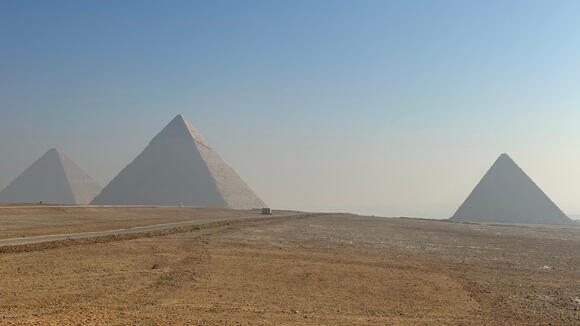
The Ruins of Giza – If there is one place on earth that mystifies humans to this day, it would have to be the Pyramids of Giza, built during the fourth dynasty of the Old Kingdom. While pyramids of different styles and sizes are located throughout Egypt, especially along the Nile, the largest are located in Giza. Giza is located on the west bank of the Nile River and the pyramids are located at its western edge. Visitors may be quite surprised at how close the pyramids are to modern settlements.

https://img.particlenews.com/image.php?url=4FE2bi_0kfR2agI00

The mammoth Great Pyramid was built around 2,560 BC as the final resting place for Pharaoh Khufu (the second pharaoh of the Fourth Dynasty), and no one is certain as to the construction techniques used. Standing at 481 feet tall, and built of 2.3 million blocks of limestone, each weighing 2.5 tons, the pyramid was constructed by roughly 100,000 skilled laborers over a twenty year period. Other nearby Pyramids include the tombs of Khafre and Menkaure, as well as many other smaller temples and tombs. The pyramids were more than a grave for the Pharaohs. They were also built to facilitate a successful afterlife for the king so that he could be eternally reborn. This is why many of the pharaohs belongings were buried with them. If only I could travel back in time to witness the pyramids at the time of their construction, covered in a smooth white limestone finish and topped with gold block.

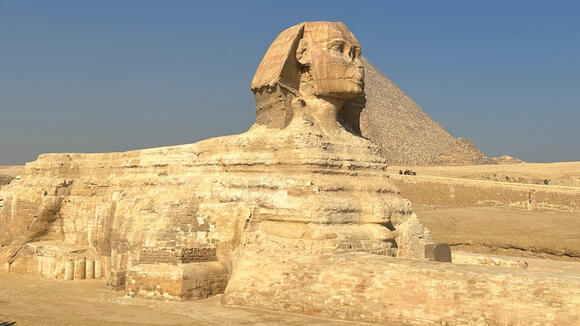
A visit to the nearby great sphinx of Giza is also a must. This large statue with the head of a human and the body of a lion was carved from one huge piece of limestone. It was built during the reign of King Khafre, around 2500 BC.

https://img.particlenews.com/image.php?url=4Nso47_0kfR2agI00

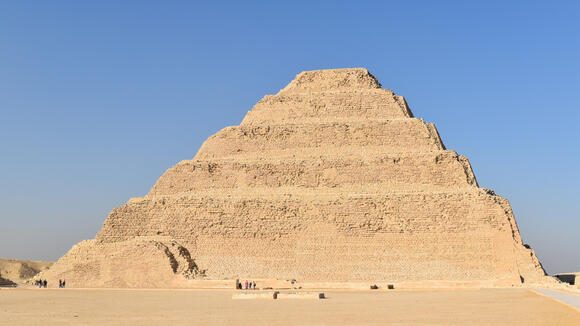
Saqqara – Twenty miles south of Cairo is Saqqara, where the burial grounds for the ancient Egyptian capital of Memphis are located. It is here where the oldest stone building complex exists – the Pyramid of Djoser, built in approximately 2,700 BC. This 200 foot tall pyramid is also known as the Step Pyramid because of its’ layered wedding cake shaped formation.

https://img.particlenews.com/image.php?url=33Clg3_0kfR2agI00

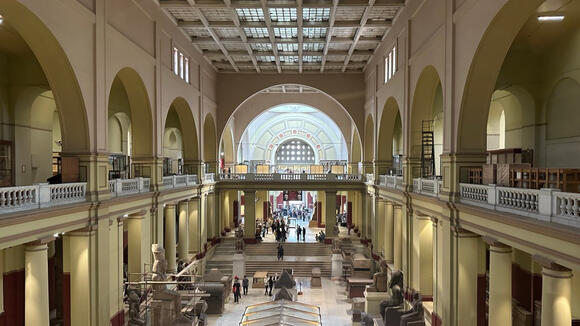
Egyptian Museum – Any visit to Cairo would not be complete without seeing the Egyptian Museum, which holds the largest collection of ancient Egyptian antiquities in the world. The museum is located in Tahrir Square on the east bank of the Nile River. Housed in a Neoclassical building dating from 1902, the museum’s two levels have over 136,000 items on display. We were amazed walking through the massive space, seeing up close a full display of all things Egyptian. The collection includes large scale stone works of statues, reliefs and architectural elements, papyri, coins, textiles and sarcophagi. Items are arranged chronologically from the pre-dynastic to the Greco-Roman period. There are two rooms containing mummies of kings and royal family members of the New Kingdom. Our highlight was touring the relics from the tomb of King Tutankhamun (Tut), including his golden mask and throne.

A new museum called the Grand Egyptian Museum, is being built in Giza, anticipated to open in 2023. It will have the largest, most complex collection of ancient treasures and artifacts in the world. Many of the relics from the current museum, including all relics related to King Tut, will be moved to the new museum. A 3,200 year old statue of Ramses II will greet visitors at the entrance.

https://img.particlenews.com/image.php?url=0MaUjA_0kfR2agI00

Coptic Cairo – About ten to twenty percent of the population of Egypt are Coptic Christians who adhere to the Coptic Orthodox Church. Copts speak the Coptic language, a direct descendant of the ancient Egyptian language. They are said to be the closest blood line to the ancient Egyptians because they did not marry outside the religion after the Muslim conquest of Egypt in the 7th century. Part of Old Cairo, the Coptic area encompasses the Babylon Fortress, the Coptic Museum, and a number of Coptic and Orthodox churches dating from nearly 1,700 years ago. Most of the sites are within the enclosure of the Babylon Fortress which was built by the Romans around 30 BC with the arrival of emperor Augustus. The Coptic Museum holds the largest collection of Coptic Christian artifacts in the world, including metalwork, stonework, woodwork, textiles and manuscripts.

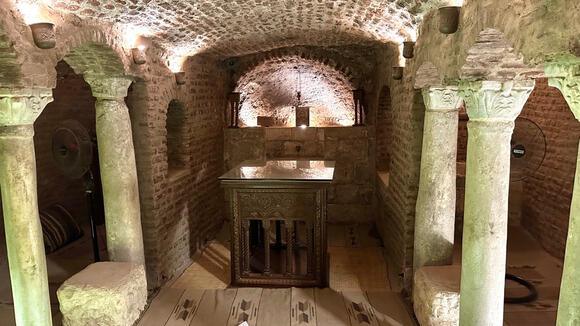
When King Herod of Judea ordered all firstborns to be killed, the Holy Family fled to Egypt. The crypt where they are said to have sought temporary refuge can be found beneath Abu Sarga, also known as the Church of St. Sergius and Bacchus (two Roman soldiers and martyrs), built in the 4th century CE. It is the oldest church in Egypt, and the crypt contains a domed ceiling, nave, and baptistery.

The Hanging Church, so named because it’s nave is suspended over a passage to the Babylon Fortress, was built around 690 CE, replacing earlier versions. It is one of the earliest churches in Cairo and includes over 100 beautiful icons and mosaics.

https://img.particlenews.com/image.php?url=0YfdJj_0kfR2agI00

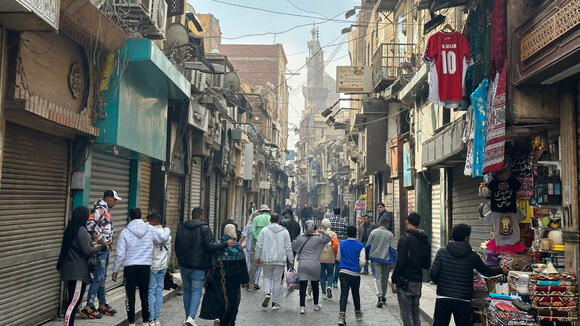
Old Islamic District – Located within the historic Islamic district of Cairo is the crowded and colorful Khan El Khalili souk (marketplace) that dates to the 14th century. The huge market is the perfect place for maximizing your senses of sight, smell and sound. The market contains hundreds of vendors selling pretty much everything, including antiques, gold and silver jewelry, spices, perfumes, clothing and carpets. We saw many interesting sites including a number of mosques with their towering minarets and medieval Islamic architecture. Nearby Al-Hussein Mosque is one of the largest, and is considered one of the holiest Islamic sites in Egypt.

https://img.particlenews.com/image.php?url=3KK3Lc_0kfR2agI00

While strolling through the narrow winding alleys of the souk, you get the feeling of being in medieval Cairo. One memorable moment is when I glanced to see a young man balancing a huge platter of freshly baked bread on his head while riding a bicycle. There are many restaurants and coffee houses where you can try Arabic coffee or hibiscus tea, and smoke shisha from a hookah. Hibiscus tea, also known as Karkadéh, was the preferred drink of the pharaohs, and the beverage is still popular today. We were greeted at many restaurants and shops with this delicious drink. The tea is made by boiling the hibiscus flower, and the drink has a bright pink color. Fishawi’s Coffee Shop, open since 1773, is the oldest coffee shop in Egypt.

Post written by Steve Sindiong

camel-pyramids
Africa

Egypt – An Ancient Country of Contrasts

I recently took my first trip to amazing and colorful Egypt, the land of Civilizations. This fascinating country has plenty to offer, including jaw dropping 5,000 year old temples and ruins, fantastic museums, beautiful natural scenery, ancient and modern cities, delicious food and friendly warm people.

Our trip consisted of two key components, including spending time in the capital and largest city, Cairo, and spending four days on a river boat along the Nile River between Luxor and Aswan. An overview of each is provided in the following separate posts.

Cairo – A City of Sensory Overload

A Scenic River Cruise Along the Nile

How to Tour Egypt

I would recommend that any traveler to Egypt use a good tour group at this time, rather than traveling on their own. Tour groups in Egypt are required to use security personnel. In addition, a tour group takes care of all transportation, hotels, meals, entry fees at attractions (thereby allowing you to bypass long lines) and use tour guides who are experts at providing information about all of the historic sites as well as managing daily logistics. We used Gate1, a tour company that I have used on several other trips. Gate1 offers a wide variety of air and land tours throughout the world at a reasonable price. Their tours include international and domestic transportation, varied and interesting itineraries, optional excursions and good to excellent lodging and dining. In Cairo, we stayed at the Marriott hotel, one of the best hotels in the city, located on Zamalek Island.

Our tour manager and guide, Rania, was excellent. She took care of all 30 of us from the beginning to the end of the trip, especially when some of us became ill from food poisoning. With her degree in archaeology, Rania was an expert Egyptologist, providing an in-depth history of each of the sites we visited, including a description of the hieroglyphics. She also provided information on modern Egypt, including the recent and current politics, social issues, and overall logistics.

Entry and Exit Requirements – American visitors to Egypt are required to have a valid passport with one or more blank pages, and a Visa. Visas can be purchased upon arrival at Cairo International Airport for $25 or can be purchased online ahead of time. All tourist visas are valid for 30 days.

The People

The population of Egypt is approximately 100 million people, and most of the population is concentrated in Cairo, Alexandria and along the fertile Nile Valley.  Egypt has a long history of being invaded by various cultures over thousands of years, including the Romans, Greeks, Persians, Arabs, British, French and other groups, resulting in a multi-cultural modern Egyptian society. The vast majority of the population are Sunni Muslim, while about ten to twenty percent are Coptic Christians who adhere to the Coptic Orthodox Church. Copts speak the Coptic language, a direct descendant of the ancient Egyptian language. They are said to be the closest blood line to the ancient Egyptians because they did not marry outside the religion after the Muslim conquest of Egypt in the 7th century. Nubians are an ethnic group mostly concentrated in southern Egypt near Sudan, who speak Nubian languages. Nubian villages are characterized by their brightly painted stucco walls, decorated with colorful symbols and patterns.

People in Egypt are generally friendly, hospitable, and helpful. Most people speak varying dialects of Arabic, however English is widely spoken since Egypt was formerly a British colony.

A group of Nubian women

Food and Drink

Egypt has delicious food, including excellent breads, kofta (spiced minced beef), kebabs, falafel, dips including hummus, labneh and ful nabed, and middle eastern style pastries. One of my favorite dishes is Kushari, a filling platter of rice, macaroni, and lentils and topped with tomato sauce, chickpeas and fried onions. It’s pure Egyptian comfort food. Most hotels also offer western style dishes, including the breakfast buffet. Egyptian coffee is prepared with a mixture of sugar, finely ground coffee and hot water. The grounds are not filtered, but rather allowed to settle prior to serving. Hibiscus tea, also known as Karkadéh, was the preferred drink of the pharaohs, and the beverage is still popular today. We were greeted at many restaurants and shops with this delicious drink. The tea is made by boiling the hibiscus flower, and the drink has a bright pink color.

It is paramount that you don’t drink tap water during your stay in Egypt. Hotels and tour bus operators will provide bottled water daily, which should be used for drinking and when brushing teeth. Food that is cooked is generally fine, but avoid street food, and raw food items such as lettuce, and fruits and vegetables that have been washed or not peeled. Even when taking precautions, out of our tour group of thirty, about six of us still became mildly ill for a few days.

Lunch at a Nubian restaurant

Money and Tipping

In Egypt, both dollars and Egyptian pounds are accepted. However, because of the current heavy fluctuation of the Egyptian pound, many people prefer dollars. As of January 2023, one Egyptian dollar equaled .033 US dollars. Before arriving in Egypt, make sure to bring enough single US dollars for tipping. Tips are generally provided to bus tour drivers ($2 per day), tour guides ($8-$10 per day), baggage attendants and public restroom attendants ($1 for two to three people). At restaurants, tipping is generally about 10 to 15 percent of the bill. If you take photographs of people, such as camel owners, expect them to ask for a tip.

Souvenirs

Some of the best locally made items to buy include perfumes, oils and scents, cotton scarves, galabeya (loose gowns worn by both men and women), papyrus, spices, dates, alabaster, silver and gold jewelry and carpets. Adjacent most of the temples and ruins are tourist markets where aggressive vendors will try to sell souvenirs. Souvenirs can also be purchased in the main markets, and at stores. In the markets, if you are not interested in purchasing, it is best to avoid eye contact with or respond to vendors. Once you speak to them, they will harass you, walking with you along the way. If you are interested, make sure to haggle with them – it is expected. Many souvenirs are not actually made in Egypt, but are rather cheap knock offs, so make sure to examine them carefully.

Post written by Steve Sindiong
amalfi
Europe

Sorrento & Amalfi: Discover the Hidden Gems along your hike

Upon planning a trip to Italy, most individuals fill their itinerary with crowded cities or wineries showcasing the finest aged wine. While these account for a large portion of the country’s tourism due to their charming stature and gripping architecture, there is more to the country beyond these typical destinations. On our slower-paced walking tour through the regions of Sorrento and Amalfi, travelers can experience a mixture of hilly terrain and coastal views while also indulging in cultural tours giving a behind-the-scenes look at Italy as a whole.

Although Italy’s coastal towns have picked up in tourism over the years, exploring these provinces by foot gives travelers a more authentic feel for the country and educates visitors on the sophisticated production of various cooking bases that contribute to the country’s full-flavored cuisine. On this tour, experience the vintage pull of these towns that appear as a polaroid picture brought to life.

A Hike With Views of the Mediterranean

Any successful hike must be paired with breathtaking views, and Sorrento’s hiking options are no different. As you begin to explore this country by foot, start out in the resort town of Ravello. This classy summertime retreat is home to cliffside gardens and stunning sunset views. Visit Villa Cimbrone, a 12th-century villa showcasing unrivaled views of the Mediterranean at any point in the day.

Although the calming atmosphere of this sophisticated village might tempt you to check in for the night, don’t pass up the opportunity to take a hike through Ferriere Valley, a nature reserve with promising views year-round and rare species candidly posing for photographs. Enjoy a picnic lunch before continuing your hike to the end-point of Piazza del Duomo in Amalfi, an open space with a cathedral and sculpted statue.

An Immersive Encounter With Olive Oil

Your walking tour continues in the idyllic village of Nerano, leading onto the Bay of Ieranto on a path rounding a mountain. On your way, your group will make a pit stop at an olive grove for a historical perspective of the surrounding villages. After a brief intermission, your hike will continue down aged rocky stairs to the Bay of Ieranto, where you’ll be able to indulge in a mid-day swim to recover from a day’s worth of walking.

Staying on theme with the day’s prior teasing of olives, your afternoon will consist of a deeper dive into the production of one of Italy’s favorite cooking staples: olive oil. Your group will visit an olive oil mill in order to grasp the phases involved in olive cultivation. Following this immersive cultural exchange, you’ll be able to taste this fresh olive oil with your group members, further understanding why it is a favorite ingredient of many.

Capri, The Path of Gods, and Lemons Galore

While in the Sorrento region, it would almost be offensive not to visit the island of Capri. Despite its rise in tourism, this beautiful island is a worthwhile addition to the trip. Avoid the tourists by hiking along the Pizzolungo trail to gain celebrated views of the coastline and Natural Arch.

The following day, your group will be transported to Bomerano, home of one of the most famous hiking trails known as the Path of Gods. Throughout this rocky seaside hike elevated above the colorful village below, you’ll be met with panoramic views of the region that the average tourist doesn’t get to see.

Just as Paris can’t be visited without indulging in a crepe, the Amalfi coast cannot truly be experienced without sampling one of the locale’s zesty lemons in some embodiment. For this reason, your hike will end in a trip to Tramonti, home of a lemon grove where the Amalfi lemon is produced. Indulge in the locally-grown fruit and taste the delightful lemon sherbet for a refreshing afternoon snack. While enjoying this local favorite in the afternoon sun, your group will also be welcomed by local entertainment, with dancers performing the “tammurriata,” a folk dance of Campania.

Final Farewell

Must all good things come to an end? To close out your unique tour of Italy, you’ll arrive in the small town of Termini, one of Sorrento’s least-explored boroughs. Even though the town does not attract much media attention, it has an inviting call to the slower-paced travelers. Spend your morning journeying to the lighthouse of Punta Campanella. You’ll be able to trek through an ancient Roman road in pursuit of the lighthouse, also spotting temple remains and scenic views.

As your day begins to conclude, you’ll embrace the country’s locally-sourced ingredients once more, stopping at Fossa di Papa farm for a final farewell dinner made from seasonal products.

machu-picchu
Latin America

Trek Along the Inca Trail to Machu Picchu: A Once-in-a-lifetime Experience

If you want to feel the dizzying effects of the rising altitude leading you to one of the world’s New Seven Wonders of the World, taking a trek on the Inca Trail will fill this travel-sized hole in your heart. The country of Peru is a mystifying destination of its own, a home of influential culture, historical villages, and Inca construction, giving a much deeper meaning to the land’s storied past.

One of the best ways to truly come to know a destination and feel connected to the land is by embarking on a walking tour. The Inca Trail offers much in the field of enlightening interactions and physical activity. With up to eight hours of walking each day on our Inca Trail tour, travelers are able to experience the country on foot and embrace a slower form of tourism that breaks away from past-paced touristry and instead warrants a unique perspective on Peruvian heritage.

An Intro to Lima

Rather than saving a “big city finale” for the end of your trip, start out strong in the capital city of Lima, a buzzing metropolis contrasting the remote paths you will be engrossed in for the majority of the trip. With its historical significance taking the form of government buildings, you’ll be able to gain a sense of the city’s importance by walking to sights such as the Government Palace and the Cathedral of Lima. In order to truly begin digging into the culture of Peru, however, seasoned visitors recommend attending a cooking demonstration to see how a traditional Peruvian meal is prepared. From ceviche to Lomo Saltado, Peruvians have proven to have a sophisticated palate that comes alive in the kitchen. Give yourself a front-row seat to this process, learning the techniques and favored recipes that have been passed down through generations.

Begin Your Trek in Sacred Valley

After arriving in the spirited city of Cuzco, you’ll be transported to the scenic hilltop ruins of Pisac to begin the walking segment of your trip. While hiking down the steep path to Pisac village, admire the far-off views of the textured streets lined with local vendors. Walk through the cobblestone streets selling colorful artisanal crafts and accessories. Continue on foot to Moray, a leveled architectural center showcasing the Incans’ intellectual grasp of high-altitude crop growing that fed their lands for centuries.

Located within the Sacred Valley is another prominent archaeological site with squares of terrain giving off a milky color from afar. Upon walking closer, you’ll discover these squares to be salt evaporation ponds with varying degrees of neutral colors. Explore to your heart’s content before hiking back down. Spend your evening enjoying more of Peru’s foodie culture by joining a local family for a home-cooked meal in a village near the riverside.

The Highlight of the Trip: Machu Picchu

Following a few days of adjusting to the nomadic lifestyle, you and your group will board The Expedition Train to Km 104. Upon disembarking, you will begin a gradual uphill hike to the honored Incan remains known worldwide as Machu Picchu. Allow the image of Machu Picchu  to encourage you as you trek through the sacred scenery and experience the landscape in its magic hour. Your first day on the trip will lead you past the Incan ruins of Wiñaywayna and eventually lead you to Intipunku, also known as the Sun Gate. This spot will introduce you to your first glimpse of Machu Picchu, a sight that will only grow more profound as you hike down a rocky path.

The next morning will begin early for those opting into the optional hike to Huayna Picchu, an arched mountain overlooking the archaeological site. In the late morning, embark on an Inca stone trail to gain a closer look at the ancient ruins that have made Machu Picchu a UNESCO World Heritage Site. Although this influential citadel was abandoned by its former inhabitants, it has remained a protected part of history, now drawing in over a million visitors each year. Join the other travelers in admiring the Temple of the Sun, the House of the Priest, the Sacred Plaza, and a carved rock that the Incas are presumed to have used as a sundial.

Additional Incan Culture

After an immersion in the Incan ruins giving present evidence of a previous lifetime, journey to Wayllarcocha to embrace more culture by participating in a shaman ceremony. Your group will be introduced to a local “shaman” (holy man) to learn more about the prominent Andean culture and traditions. Following an educational introduction, your group will hike to yet another Incan site known as Saqsaywaman, continuing the theme of admiring ancient sites that have remained intact. The day will be finished by hiking to the cultural center of Cuzco, inviting you to journey further into the poetic San Blas neighborhood. From visiting whimsical galleries to introducing yourself to locals on their daily commute, these quarters will inspire you to sit back and admire the aesthetic atmosphere that cannot be duplicated elsewhere in the world.

Sea-Lion-Galapagos
Gate 1 ConnectionsLatin America

Experience An Ultimate Trip to the Exotic Galapagos

It’s no surprise that visiting a destination as unique as the Galapagos Islands would also entail a unique travel experience in order to experience them. Yet that very prospect awaits erstwhile travelers who come to this remote archipelago looking to immerse themselves in the varied natural wonders on display. To best appreciate the destination, let’s take a look at the overall experience. Only then can the full appeal of this bucket-list locale be truly understood.

Make The Most of Your Gateways

The only commercial flights in and out of the Galapagos Islands are from the mainland Ecuadorian cities of Quito and Guayaquil. Even on a short trip, taking a few days to explore these vibrant cities before and/or after your stay in the Galapagos will add a very enjoyable dimension to your itinerary. You can either bask in the historic charm of UNESCO World Heritage Quito, with its colonial era churches and architecture, or have some fun in the modern metropolis of Guayaquil, with its resplendent Malecon 2000 and colorful Las Penas neighborhood. For a taste of both old and new, why not try a combination of both?

Touring the Islands

Arriving at the island of Baltra, visitors to the Galapagos have essentially two options: board a cruise ship or yacht to explore the archipelago, or concentrate your time on a select few destinations. For budget-conscious travelers, the latter is by far the most practical option—one that will still allow for meaningful experiences that encapsulate the characteristic sights and activities that make the Galapagos a world-class destination.

Santa Cruz

Practically adjacent to the gateway airport on Baltra Island, the island of Santa Cruz is host to some wonderful volcanic scenery and nature-focused activities. Most visitors will at some point either stay in or pass through the town of Puerto Ayora, situated on Academy Bay along the southern coast of the island. Nearby is the Charles Darwin Research Station, a must-see attraction where visitors can gain greater insights on the unique flora and fauna found only in the Galapagos, along with up to date information on current conservation programs.

Day Trips

From Puerto Ayora, guests can embark on a variety of day trips to visit surrounding islands—each with their own appeal. A popular trip is out to tiny Bartolomé Island, with its signature feature—Pinnacle Rock. Surrounded by beaches suitable for swimming and snorkeling, you might see turtles, sea lions, several types of sharks and rays, and even a small penguin colony in the shadow of this spire of lava rock jutting up from the shoreline. Another popular day trip is a visit to North Seymour Island. This low-lying land-mass is teeming with wildlife—boasting large colonies of frigate birds, iguanas, and blue-footed boobies.

Practical Details

As was mentioned before, visiting the Galapagos is not your everyday adventure. With that in mind, some practical tips will help you enjoy your trip to the fullest.

One of the most appealing aspects of the Galapagos Islands is their remote, unspoiled and undeveloped nature. In practical terms that means that at times getting to these amazing locations will require a measure of stamina, often crossing through uneven terrain. Those prone to seasickness would do well to bring medicine with them (and take it before getting on a boat) and be sure to have your camera equipment fully charged and ready for wildlife encounters that can arise at any given time.

The Galapagos Islands lie along the Equator, so air and water temperatures are relatively stable all year long, with the coolest months being June through November. As a national park, there are associated fees specific to the islands, though when traveling with a reputable tour operator such details are generally included in the price. And while on the subject, having at least some of your activities led by a knowledgeable guide who speaks your language will greatly enhance your overall experience.

The Galapagos is a bucket-list destination for those who love nature, animals, diving and anything related to ecology. With some forethought, dedication and the assistance of a knowledgeable tour operator, you can experience this natural wonderland with minimal hassle and make your experience the ultimate trip to the Galapagos Islands.